

By Jane Lewis | Friday, April 10, 2025 | 5 min read
In a rare and unexpected public appearance, Melania Trump stepped to the podium and delivered remarks that quickly reverberated across Washington and beyond. What began as a seemingly routine statement soon evolved into something far more consequential: a renewed spotlight on the long-running controversy surrounding Jeffrey Epstein.
Opening her remarks with a firm tone, Melania Trump dismissed what she described as false allegations linking her to Epstein and his associate, Ghislaine Maxwell. She framed the moment as an effort to “clear her name,” citing what she called misleading social media content and fabricated claims. Yet the very act of addressing the issue publicly raised immediate questions among political observers: why now?
For many watching, the surprise was not just the subject matter but the timing and staging. The speech appeared unannounced, catching even seasoned insiders off guard. Reports suggested that some White House staff were unaware it was coming, while conflicting accounts emerged over whether Donald Trump had prior knowledge of the address.
The reaction was swift and, in many cases, puzzled. Critics noted that the allegations Melania Trump sought to refute were not widely circulating in mainstream discourse at the time, prompting speculation that the speech may have been preemptive—an attempt to get ahead of potential reporting or disclosures.
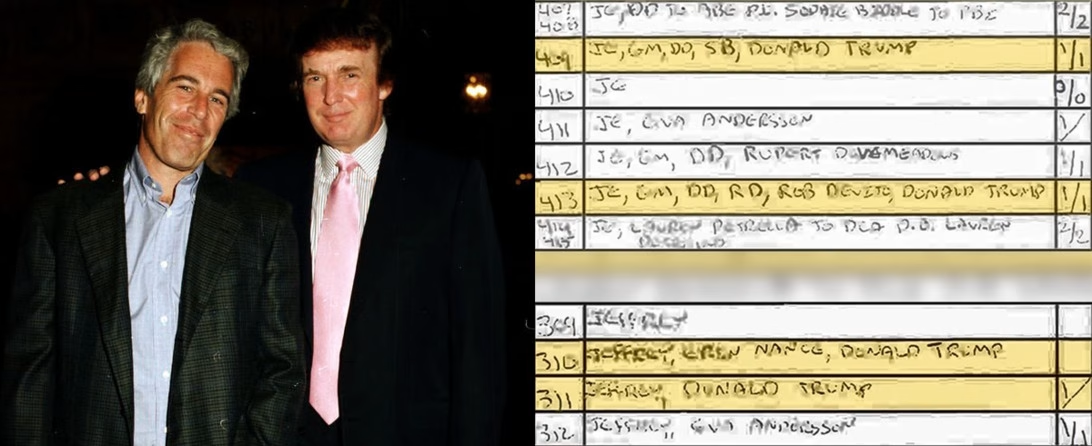
During her remarks, Melania Trump denied having any relationship with Epstein or Maxwell. However, public records and archival material complicate that assertion. Photographs from social events in the early 2000s show her in proximity to both figures, including gatherings attended alongside Donald Trump. Additionally, previously released documents contain an email attributed to her, addressed to Maxwell, which she characterized as “casual correspondence.”
The nature of that correspondence has become a focal point for scrutiny. While Melania Trump described it as insignificant, critics argue that the tone and familiarity reflected in the exchange suggest a more personal connection than she acknowledged. The broader question, however, is not merely about social interactions but about the accuracy and completeness of her public statements.
Another point of contention arose from her claim that her name had never appeared in official materials related to the Epstein investigation. Reports indicate that her name was mentioned in at least one FBI interview, though the context and reliability of that reference remain unclear. Still, the discrepancy has fueled further debate about transparency and credibility.
Perhaps the most politically charged moment of the speech came when Melania Trump called on Congress to hold hearings centered on Epstein’s victims. Positioning herself as an advocate for survivors, she urged lawmakers to provide a platform for testimony under oath. Yet that appeal was met with skepticism, particularly from those who argue that efforts to hold such hearings have been obstructed in the past.
A group representing survivors and victims’ families responded critically, suggesting that the former first lady’s comments shifted responsibility onto those already affected while failing to address the role of powerful institutions. Their statement emphasized that survivors have long sought accountability and that meaningful action must come from those in positions of authority.
The political response echoed similar concerns. Robert Garcia described the speech as “stunning” and questioned its intent. He pointed to ongoing disputes over the release of Epstein-related files and argued that calls for transparency should begin within the administration itself. According to Garcia, significant portions of those records remain undisclosed, and efforts to obtain them have faced resistance.
Beyond the immediate controversy, the speech has had a broader effect: it has once again placed the Epstein case at the center of national conversation. For years, the issue has lingered at the intersection of politics, justice, and public accountability. Melania Trump’s remarks, whether intentional or not, have reignited interest in unresolved questions surrounding the case.

Mein Kampf & Trump — Available on Amazon
The timing is particularly notable given the wider geopolitical context. As the administration grapples with international tensions and criticism over foreign policy decisions, some analysts see the sudden focus on Epstein as a potential distraction. Others caution against drawing definitive conclusions, noting that the motivations behind the speech remain unclear.
What is certain is that the address has generated more questions than answers. By stepping forward to address the issue directly, Melania Trump has inserted herself into a narrative that continues to evolve—one marked by legal complexities, political implications, and the enduring demand for accountability.
As the situation develops, attention will likely turn to whether her remarks signal further disclosures or simply represent a one-time intervention. Either way, the ripple effects are already being felt, ensuring that the Epstein story remains far from resolved.
Absolutely No One Wanted a “Melania” Movie, While the Chaos and Killing Continues
Photo Shows ‘Melania’ Director Brett Ratner with Jeffrey Epstein and Women
From Threatening Genocide Against Iran to ‘Two More Weeks’ Delay’: Trump’s Dangerous Farce
Hungary’s Orbán, Putin, Trump, and the Right: When Alliances Turn Dangerous
Trump Hit With Instant Karma as Judge Assignment Turns Against Him in $20 Billion Suit
Shocking Poll: 47% of Republicans Say They’d Support Trump Even If Linked to Epstein Crimes
200 Executive Orders and Counting: Trump’s Pen Crushes Congress and the Constitution
Did Trump Just Hand Iran the Power to Move Wall Street With a Single Denial?