


By Don Terry | Saturday January 24, 2026 | 4 min read
The setting alone told the story. Inside the U.S. Capitol—still carrying the weight of January 6—Jack Smith appeared under oath to explain what his investigation found and why it mattered. This was not theater. It was not bombast. It was the deliberate, careful testimony of a career prosecutor laying out what he believes history will judge harshly: that Donald Trump committed serious crimes against American democracy and would have been convicted had the justice system been allowed to run its course.
Smith did not raise his voice. He did not dramatize his conclusions. In fact, he was almost painfully restrained. But the message was unmistakable. Based on the evidence his team gathered—much of it from Trump’s own aides, allies, and fellow Republicans—Smith said he was confident a jury would have found Trump guilty beyond a reasonable doubt.
That statement alone should have stopped the room.
Instead, much of the coverage treated the hearing like just another partisan skirmish, another round in Washington’s endless noise machine. That reaction misses the point. What made Smith’s testimony so striking was not its theatrics, but its absence of them. In an era of exaggeration, memes, and deliberate misinformation, Smith represented the opposite: process, evidence, and restraint.
He reminded the country of something we are at risk of forgetting—that every defendant is presumed innocent, but not every case is equal. Some cases are built on rumor or speculation. This one, Smith argued, was built in real time, with documents, witness testimony, and corroboration across party lines. The alleged conduct was not abstract. It was direct: pressuring officials to overturn an election, promoting false slates of electors, encouraging lies about voter fraud, and mishandling classified documents after leaving office.
None of this was news to investigators. What was new was hearing it laid out, under oath, by a prosecutor who has spent decades pursuing public corruption cases without regard to party. Smith has prosecuted Democrats and Republicans alike. That credibility matters, especially when the stakes are this high.
Republicans on the committee tried to undermine him, yet their own questioning often reinforced his case. Yes, Trump pushed false claims about the election. Yes, he sought to interfere with certification. Yes, he attempted to assemble fraudulent elector slates. These were not contested facts in the hearing. They were acknowledged realities.
Smith also made clear what he would not do. He refused to discuss the classified documents case because a court order prohibits it. That choice, too, mattered. In a political culture increasingly comfortable bending rules when convenient, Smith adhered strictly to them. He played by the book, even as others have shown little interest in doing so.
There were no dramatic “gotcha” moments. No viral soundbites engineered for social media. If there were fireworks, they were substantive ones—and that is precisely why they were easy to miss. The real explosion lay in the implication of Smith’s testimony: that the failure to hold powerful figures accountable carries consequences far beyond one man or one presidency.
Smith warned that when crimes of this nature go unanswered, election workers are endangered, democratic norms erode, and public trust collapses. He was not speculating. He was describing a trajectory the country has already begun to travel.
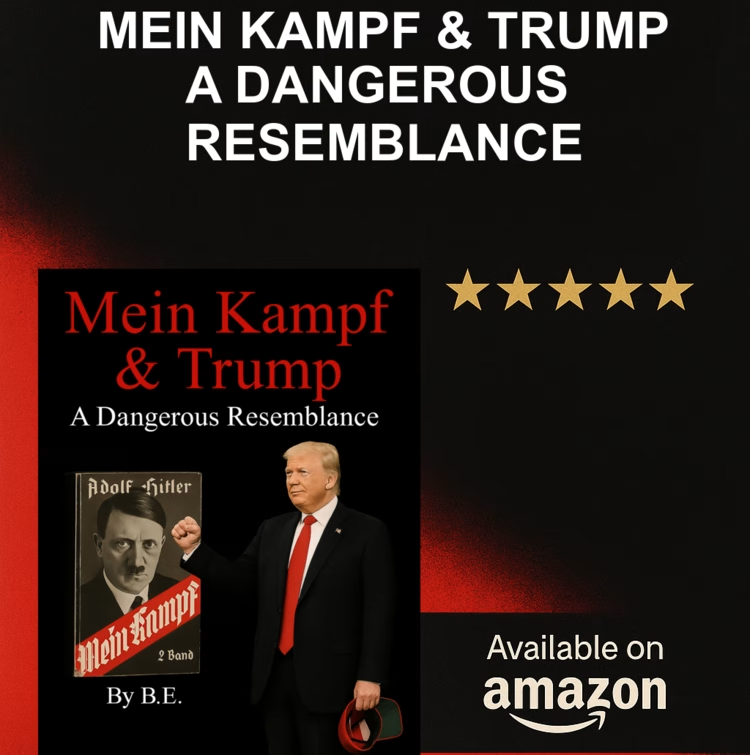
Mein Kampf & Trump Now On AMAZON
This is not about vengeance or partisan scorekeeping. It is about whether the rule of law applies equally, even to former presidents. Smith’s testimony suggested that the evidence was there, the witnesses were there, and the case was ready. What stopped it was not a lack of proof, but time, delay, and political reality.
In the end, Jack Smith wasn’t asking the public to applaud or recoil. He was asking something harder: to look squarely at the evidence, to respect the law, and to understand what is actually at stake. Democracy, he made clear, doesn’t run on autopilot.
It survives only if people are willing to defend it—carefully, consistently, and without regard for who may be held accountable. And if Trump Justice Department were to go after Smith out of spite, leaning on the familiar “lying to Congress” charge because it avoids confronting the real conduct at issue, that move could easily invite a broader reckoning—one grounded in the very evidence they’ve tried to ignore.