
By Jane Lewis | Saturday May 09 2026 | 5 min read
If you’re a Republican running for reelection this year, you have to confront a simple, uncomfortable question: what exactly are you running on? Picture the scene—your campaign team crowded around a conference table, consultants flipping through polling memos, strategists spit‑balling stump‑speech lines. When it comes time to list your accomplishments or outline a policy vision, what do you actually have to offer voters? Democrats, by contrast, aren’t facing that same vacuum—they can point to a clearer set of priorities and arguments, even if not every voter agrees with them.
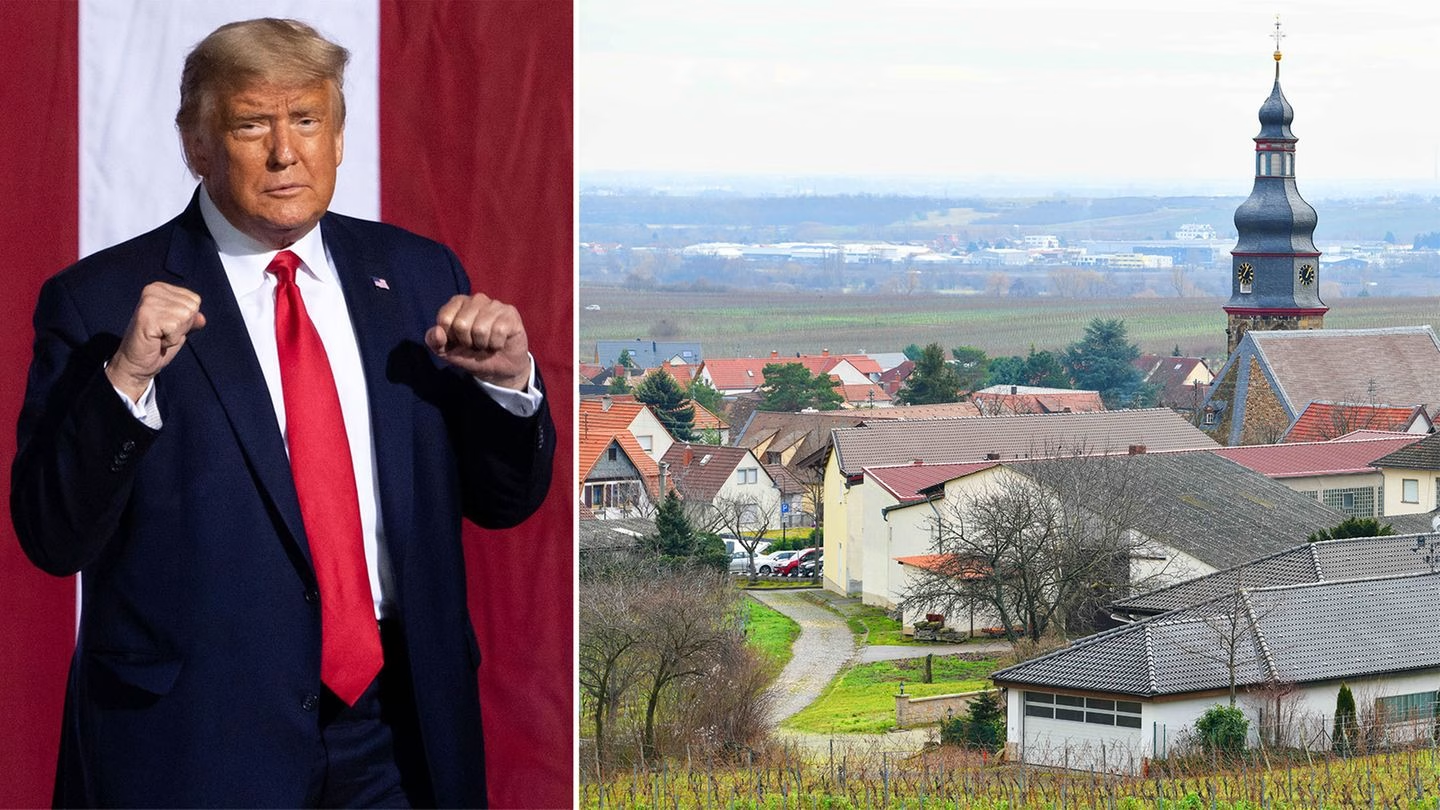
For the better part of a decade, Republicans haven’t had to answer that question themselves. They outsourced it to Donald Trump. Whatever he fixated on became the party’s platform, no matter how impractical or unpopular. When he said “build the wall,” the party didn’t debate the merits—they asked how high and how fast.
So what is Trump fixated on now? Not inflation. Not healthcare. Not foreign policy. Granite.
Yes, granite.
In recent weeks, Trump has spent an astonishing amount of time talking about stone—black granite, white stone, “American flag blue” granite, even turquoise. He’s delivered long, meandering monologues about the strength of granite versus marble, the way sunlight reflects off different surfaces, and the aesthetic virtues of various shades of gray. These aren’t one‑off comments; they’re recurring themes.
And here’s the kicker: none of this was about his much‑discussed ballroom. Those clips were simply Trump riffing about renovations to the White House and the National Mall. He has spent his presidency sounding less like a head of state and more like the host of a home‑renovation show, wandering through construction sites and critiquing stonework.
But the absurdity has real political consequences. Trump is now asking Congress to approve $1 billion in taxpayer money for that ballroom—the same one he once claimed would be funded entirely by private donors. According to reporting from Punchbowl News, vulnerable Republicans are panicking. One House Republican reportedly said, “A first‑year poli‑sci major would know not to ask members to take this vote.” Another flatly predicted it would never reach 218 votes.
Republicans know voters won’t support a billion‑dollar vanity project while they’re struggling with high gas prices and rising costs. So if they can’t run on Trump’s priorities, what else is there?
They could try running on policy—except the recent record is a minefield. The administration moved to loosen restrictions on minors using tanning beds, despite warnings from dermatologists. It pressured the FDA to approve flavored vapes, even firing an FDA commissioner who didn’t move fast enough. It lifted a ban on cyanide bombs on public lands. These aren’t exactly crowd‑pleasers.
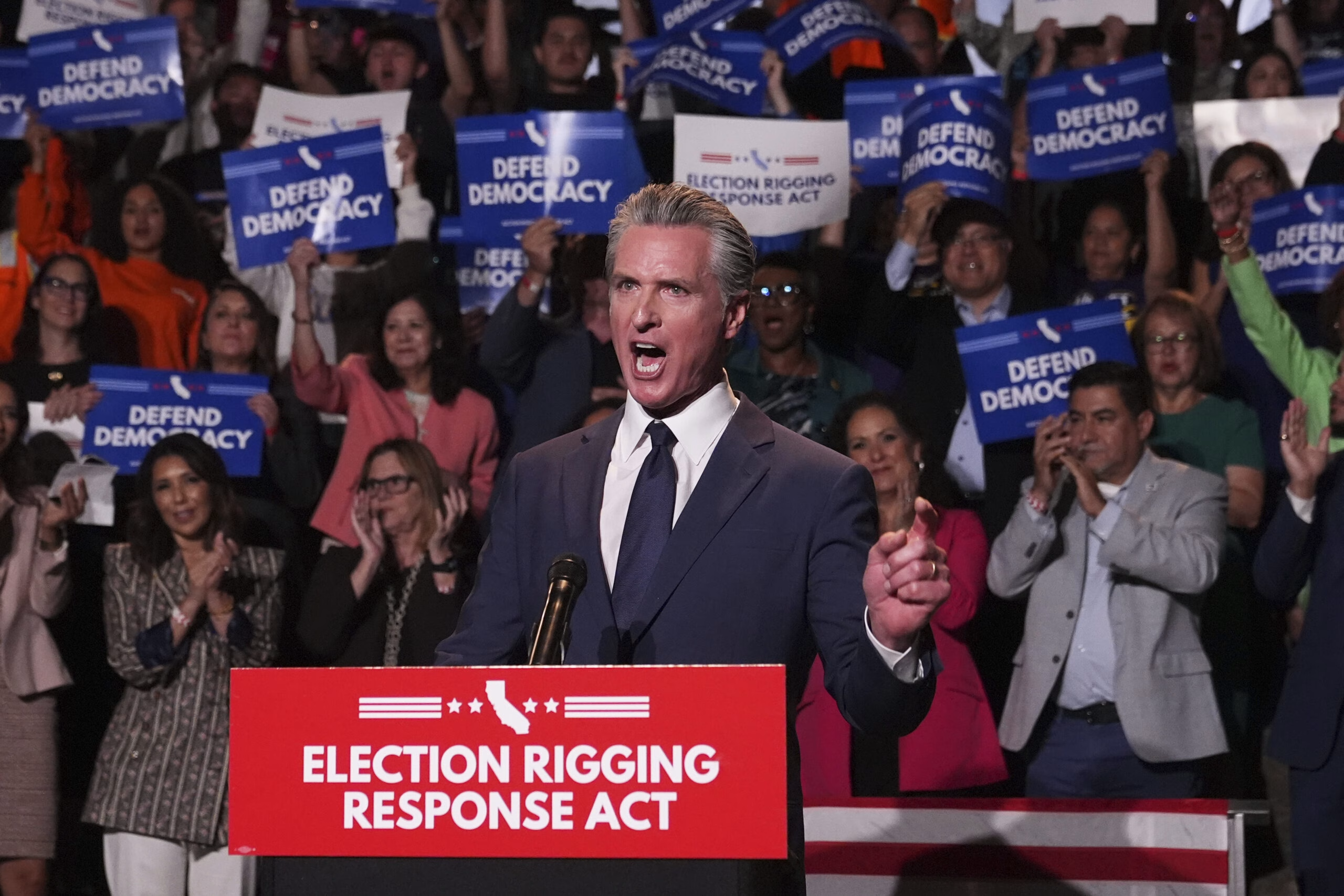
So Republicans are turning to something else entirely: gerrymandering. Across several states, GOP lawmakers are pushing through new congressional maps—some even mid‑election—to tilt the playing field. Protests have erupted in Louisiana, Alabama, Tennessee, and beyond as communities watch their representation carved up or diluted.
Democrats have pushed back, but not without setbacks. Some of their efforts have been stopped in court, and the legal terrain is far from level. Even so, none of this hands Republicans an automatic advantage. Recent elections suggest Democrats can still turn out voters, even in difficult conditions. And Trump’s continued unpopularity weighs on the party, particularly with independents and suburban voters. The Supreme Court itself isn’t on the ballot—but questions about its credibility and future role very much are.
Meanwhile, Trump’s fixation on the 2020 election hasn’t faded—it’s intensified. His administration has used federal agencies to chase down long‑debunked conspiracy theories: seeking voter data from all 50 states, probing voting machines in Puerto Rico, raiding an election office in Georgia, subpoenaing personal information from election workers, and widening investigations into states he lost. The pattern is unmistakable, and it’s happening with another election on the horizon.

Mein Kampf & Trump — Available on Amazon
Former Republican congressman Adam Kinzinger—who served on the January 6 committee—has warned that this isn’t just about Trump’s ego. It’s about laying groundwork for future challenges to election results. His advice to Democrats is blunt: make the election decisive enough that attempts to “tinker around the edges” won’t matter.
And that’s the larger truth here. Gerrymandering may distort maps, but it can’t erase voter sentiment. Coalitions can grow. Turnout can surge. And when voters are focused on the issues that actually shape their daily lives—cost of living, healthcare, jobs—granite colors and ballroom renovations don’t stand a chance.
The fight over representation won’t end this year. It will continue in statehouses, courts, and communities. But Democrats have shown they can compete, even when the map is stacked against them. And in a political moment defined by spectacle, distraction, and stone‑color monologues, clarity can be its own kind of power.
Blood to Ballrooms: How Trump Turned Assassination Attempts Into Power and Profit
Justice Thomas Helped Dismantle the Voting Rights Protections His Parents Once Needed
Former FBI Director James Comey Charged Over Alleged Threat in ‘8647’ Seashell Post
The Cole Allen Case and Its Potential Risks for DOJ Handling of Epstein-Related Files
Trump fires back: “I’m not a rapist or pedophile” in response to Cole Allen-linked manifesto