
By Andrew James | Thursday May 07 2026 | 6 min read
American presidents have always lived with danger. Threats come with the office, whether from extremists, unstable individuals, foreign actors, or people desperate for notoriety. But the way presidents respond to those moments says a lot about who they are — and how they see leadership. That contrast has become impossible to ignore in the age of Donald Trump.
After surviving an assassination attempt during the 2024 campaign, Trump transformed the incident into something far larger than a national security event. It quickly became campaign branding, fundraising fuel, political theater, merchandise, and part of a larger narrative portraying him as both warrior and victim. His image — bloodied, fist raised — was instantly turned into posters, T-shirts, slogans, and rally symbolism.
To supporters, it showed resilience.
To critics, it revealed something darker: the ability to monetize tragedy almost instantly.
What makes the reaction stand out even more is that past presidents also survived serious assassination attempts without turning those moments into political theater or personal branding opportunities.
Ronald Reagan was shot by a gunman just outside a Washington hotel not far from where the White House Correspondents’ Dinner is traditionally held. He was rushed to the hospital and came dangerously close to dying. Yet Reagan did not use the attack to launch fundraising campaigns, promote personal projects, or build a public image around victimhood. He treated it as a national tragedy, recovered, and returned to governing.
Take Barack Obama.
During his presidency, Obama faced at least 11 to 13 known assassination plots, threats, or attempted attacks. Some were credible enough to trigger federal investigations and emergency responses. Most Americans barely remember any of them.
In November 2011, one of the most disturbing incidents unfolded when Oscar Ortega-Hernandez fired multiple rounds from a semi-automatic rifle at the White House. Bullets struck the residential section of the building where the Obama family lived.
Inside that home was Sasha Obama, still a child at the time, along with her grandmother. Malia Obama was reportedly expected back shortly afterward. The image alone is chilling: a family residence under gunfire while children were inside.
Even more alarming, the Secret Service reportedly did not fully realize the White House had actually been hit until several days later.
Yet the country did not witness weeks of self-promotion afterward. There was no merchandise campaign, no endless branding around survival, no dramatic public victim narrative.
Obama largely moved on.
There were other threats too. During the 2008 campaign, authorities disrupted a plot in Denver involving men allegedly discussing plans to target Obama. In Tennessee, white supremacists were arrested after discussing a killing spree that would end with an attack on him. Overseas, security officials intervened after concerns involving a Syrian man posing as a journalist during Obama’s trip to Turkey.
The danger did not end when he left office. At one point, Trump publicly recited Obama’s home address on television in what many viewed as a reckless and petty act. Just days later, authorities arrested an armed man who was allegedly targeting the former president.
The threats were real. The danger was real. But the public response remained measured.
The same pattern followed Joe Biden.
Federal authorities uncovered an alleged Iran-linked assassination plot targeting Biden. In another incident, a neo-Nazi extremist crashed a truck into White House barriers while reportedly expressing violent intentions. A separate Utah man accused of threatening Biden was killed during an FBI operation before agents could arrest him.
Again, there were headlines for a day or two — and then the administration returned to governing.
No national victimhood campaign followed.
That difference matters because critics argue Trump has changed how political violence is processed in America. Instead of treating threats as solemn reminders of instability and extremism, they say he has folded them into his personal brand.
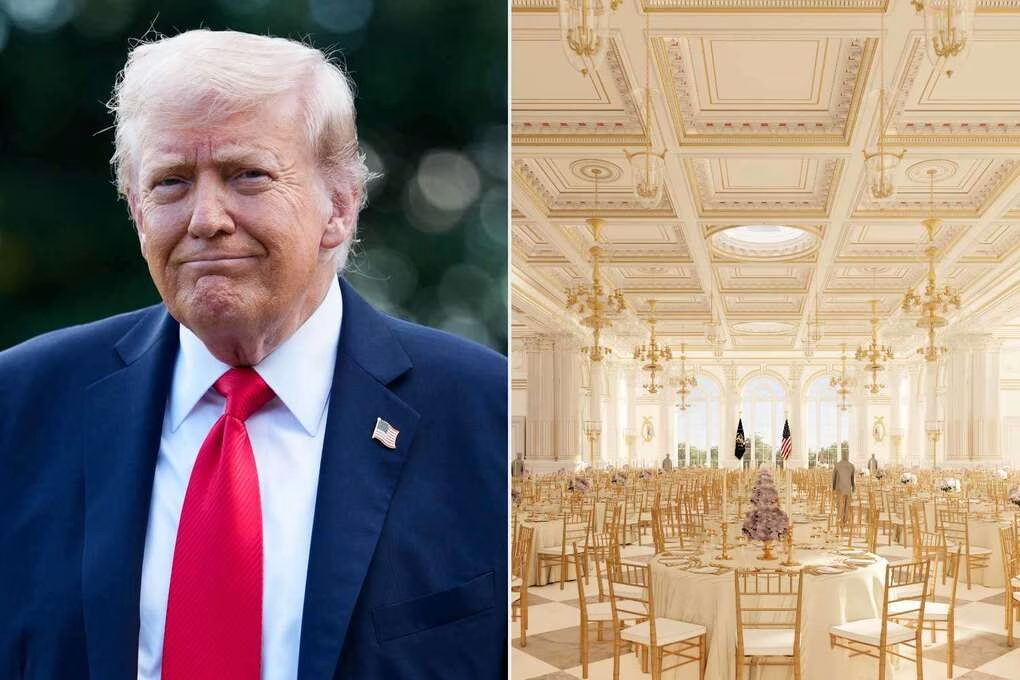
Criticism is getting louder as new reports surface about expanded security projects connected to Trump’s properties—plans that include upgraded protections as well as talk of major construction at Mar-a-Lago and a costly ballroom at the White House. Trump initially said the ballroom would be paid for by private donors, but that claim has come under scrutiny as he and his allies now push for roughly a billion dollars in funding. Critics say what should be straightforward security planning is starting to look like something else entirely—blending safety measures with luxury upgrades, political branding, questionable contract awards, possible self-dealing, and mounting costs for taxpayers.
For critics, the issue is not whether a president deserves protection. Every president does.
The issue is whether tragedy and violence should become opportunities for personal enrichment, branding, or spectacle.
That debate becomes even sharper when compared to the silence surrounding previous assassination threats. Americans can vividly recall images from Trump’s rally shooting because they were replayed endlessly across media and campaign messaging. But many Americans never even learned that bullets once struck the Obama family residence while his daughters were inside nearby. It was a chilling reminder that the danger surrounding presidents and their families does not disappear with public appearances or campaign speeches.
The country has seen that reality before—from the attempted assassination of Ronald Reagan to repeated threats against Barack Obama—yet these moments are often forgotten almost as quickly as they happen.
One incident became mythology. The others became history few remember.
Supporters of Trump argue that modern politics is media-driven and that responding forcefully to attacks projects strength. They see criticism of his response as politically motivated.
But opponents believe something more fundamental has changed. They argue that political leadership once carried an expectation of restraint — especially during moments involving violence or national trauma.
To them, the concern is not simply Trump himself. It is the normalization of turning every crisis into marketing, every threat into branding, and every moment of danger into political currency.

Mein Kampf & Trump — Available on Amazon
And beneath all of it sits a broader frustration many Americans share: while politicians debate security upgrades, luxury projects, and political narratives, the country still struggles with the root causes of political violence itself.
Mass shootings continue. Extremism continues. Threats against public officials continue.
Critics argue that a reasonable national response to repeated political violence would focus less on personal image and more on addressing gun violence, extremist radicalization, and public safety before the next tragedy arrives.
Because in the end, leadership is not only measured by surviving danger.
It is measured by what someone chooses to do with that moment afterward.
Justice Thomas Helped Dismantle the Voting Rights Protections His Parents Once Needed
Former FBI Director James Comey Charged Over Alleged Threat in ‘8647’ Seashell Post
The Cole Allen Case and Its Potential Risks for DOJ Handling of Epstein-Related Files
Trump fires back: “I’m not a rapist or pedophile” in response to Cole Allen-linked manifesto
Jesus vs. Donald Trump: Comparing Legacy and Impact After Jesus-Like Image Controversy