
By Tony Bruce | Thursday June 11 2026 | 4 min read
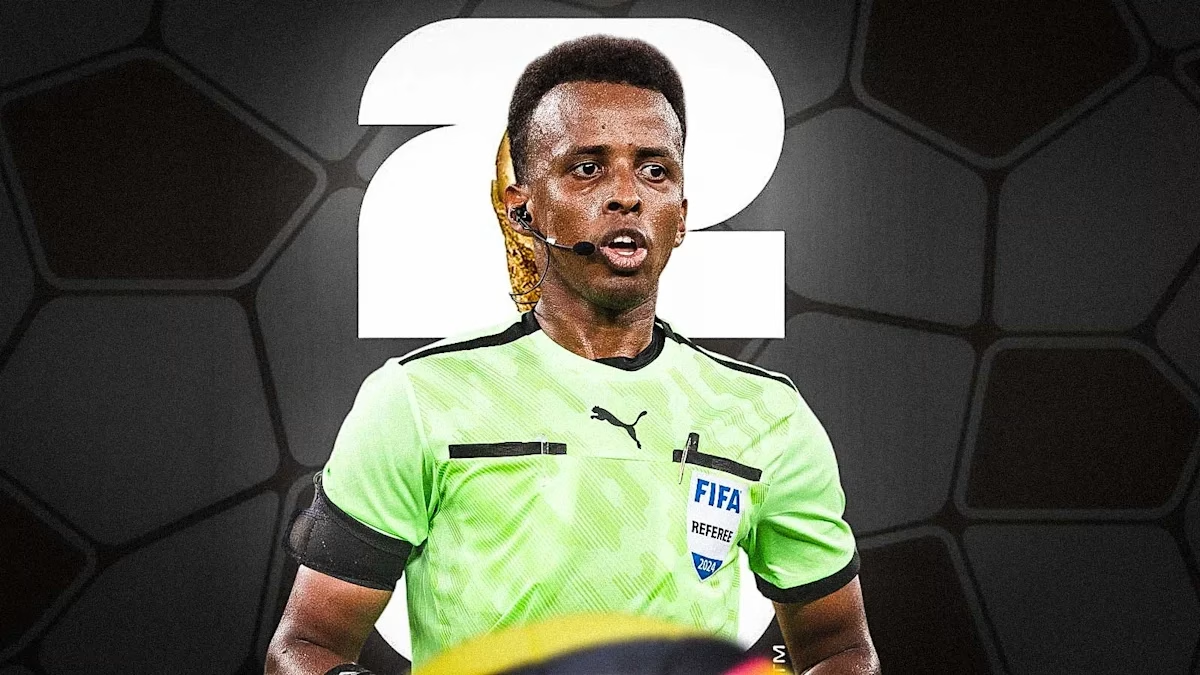
The story of Omar Artan isn’t just another bureaucratic mishap or a footnote in the long list of immigration blunders. It’s a human story—one that exposes how political decisions ripple far beyond borders, careers, and even common sense. Artan, widely regarded as one of Africa’s most respected referees, spent years grinding through local leagues, hostile stadiums, and unforgiving scrutiny to reach the pinnacle of his profession. He earned his FIFA badge the hard way. He earned his World Cup selection. What he didn’t earn was being turned away at the U.S. border.
And yet, that’s exactly what happened.
Despite holding a valid visa, despite being FIFA‑approved, despite being on the cusp of becoming the first Somali referee in history to officiate at a World Cup, Artan was barred from entering the United States. The decision blindsided him, his federation, and the global refereeing community. It also triggered a wave of outrage from pundits, former referees, and football legends who saw the decision for what it was: unnecessary, unfair, and deeply damaging.
Former referee Christina Unkel didn’t mince words. “It’s not a World Cup if you don’t allow the world to come in,” she said—a sentiment that resonated far beyond the football world.
The political backdrop only makes the situation more infuriating. The U.S. travel restrictions affecting Somalia have long been criticized for their sweeping, indiscriminate nature. To many observers, the policy has felt like a holdover from an era when the Trump Administration operated as if it were still in The Apprentice Show—issuing blunt, career‑altering decisions with the same theatrical flair as the infamous “you’re fired.” Students, workers, and families have seen their futures derailed by these policies. Now, that same blunt force has reached into the world’s biggest sporting event.
And it cost Omar Artan the moment of his life.
Former PGMOL chief and ex‑FIFA referee Keith Hackett didn’t hesitate to call out the injustice. Responding to British politician Jeremy Corbyn, Hackett revealed that referees at this year’s World Cup were expected to earn around $100,000. If Artan was denied the chance to work—not because of his qualifications, not because of misconduct, but because of geopolitics—then FIFA, he argued, should pay him the same amount.
Hackett doubled down in an interview with Football Insider, calling the situation “so unfair” and urging FIFA to compensate Artan and his family. He emphasized how brutally difficult the pathway to elite refereeing is. Artan had climbed every rung. He had met every challenge. He had earned his place.
And then it was taken from him.
Mein Kampf & Trump — Available on Amazon
With the World Cup days away, players and officials are preparing for the financial windfall that comes with the tournament. But Artan, who should have been part of that group, is instead left with disappointment, lost income, and a dream deferred by forces entirely outside his control.
Somalia’s inclusion on the U.S. travel ban list sealed his fate—even though he had a valid visa. Even though FIFA could have intervened more forcefully. Even though the sport claims to be global, inclusive, and apolitical.
Hackett’s call for FIFA to pay Artan $100,000 isn’t just about money. It’s about accountability. It’s about acknowledging that a governing body with billions in reserves failed to protect one of its own. It’s about recognizing that Artan’s absence isn’t just a personal loss—it’s a loss for the sport.
FIFA can’t undo the damage. But it can do the right thing.
It can pay Omar Artan what he would have earned. It can send a message that when politics blocks the world from coming together, football won’t simply shrug and move on.
Why Critics Believe Trump and Six Justices Are Suddenly Afraid of the Midterm Fallout
The Danger of Making Elon Musk a Trillionaire: Power, Volatility, and Unchecked Influence
Brutal Court Dismissal Opens the Floodgates on Trump DOJ’s Vindictive Prosecutions
The Role of Philip Alito in the $1.776 Billion Fund: Questions of Ethics, Recusal, and Public Trust
Trump May Have Accidentally Undermined His Own Immunity Defense as Court Battle Intensifies