
By Ben Emos | Sunday June 21 2026 | 5 min read
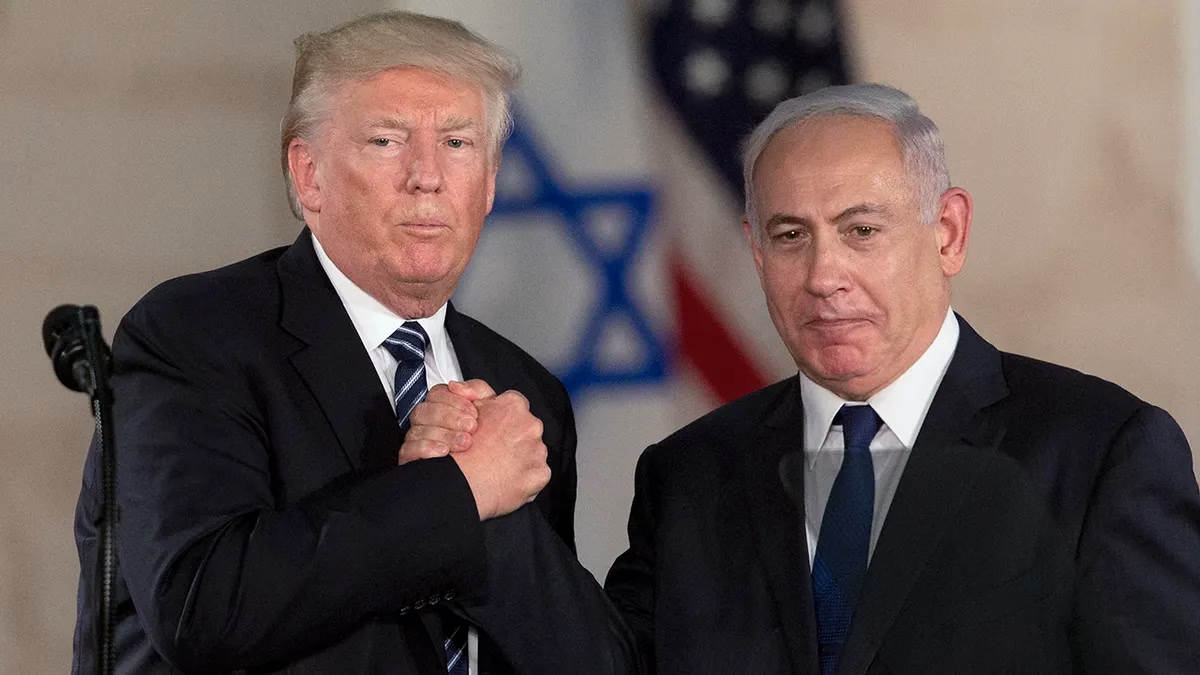
For years, critics and supporters alike have described Donald Trump as fiercely loyal to Israel. Yet one of the more revealing passages in Maggie Haberman and Jonathan Swan’s new book Regime Change suggests Trump’s private views of Israeli Prime Minister Benjamin Netanyahu may be far more complicated than his public rhetoric has often implied.
According to the authors, Trump once referred to Netanyahu as a “con man”—an insult they describe as among the harshest in Trump’s personal vocabulary. The remark stands in stark contrast to the image of unwavering solidarity that has defined much of Trump’s relationship with Israel during his political career.
What’s more striking is what happened next.
Despite reportedly expressing skepticism about being drawn into a conflict with Iran on Netanyahu’s terms, Trump ultimately backed military action that aligned with Israel’s objectives. The episode raises a question that has followed Trump’s presidency from the beginning: How much of his decision-making is driven by conviction, and how much is driven by circumstance, pressure, or political calculation?
According to Haberman and Swan, Trump told an Israel skeptic during the early months of his administration that he wanted no part of a Netanyahu-led war with Iran. That statement alone may surprise many Americans who have come to view Trump as one of Israel’s most reliable political allies.
Yet behind closed doors, the picture appears more complicated.
The authors recount a February meeting in the White House Situation Room attended by Trump, Netanyahu, and senior American and Israeli officials. During that gathering, Netanyahu reportedly laid out Israel’s case for military action against Iran. Trump, despite his earlier reservations, ultimately decided to support the effort.
The story illustrates a recurring pattern throughout Trump’s political career. He often publicly or privately criticizes allies, only to later embrace policies that benefit them. The contradiction has become one of the defining features of his leadership style.
In the case of Netanyahu, the contradiction is particularly striking.
Calling someone a “con man” is not casual language in Trump’s world. Haberman and Swan note that Trump reserves the term for people he believes are manipulative, dishonest, or operating in bad faith. If Trump truly viewed Netanyahu through that lens, it raises obvious questions about why he ultimately aligned himself with a policy agenda that he initially appeared reluctant to support.
The answer may have less to do with Netanyahu than with Trump himself.
Trump has long portrayed himself as the ultimate dealmaker, a leader who can navigate relationships through instinct and personal leverage rather than ideology. But critics argue that this approach often produces contradictions. One day a foreign leader is incompetent, dishonest, or weak. The next day that same leader is a trusted partner.
The result is a foreign policy that can appear transactional rather than strategic.
For some critics, the contrast is hard to ignore. Senator John Fetterman has become one of Israel’s strongest supporters in the Senate and has consistently backed the Netanyahu government’s position on major security issues. While a growing number of Democrats have voiced concerns about Israel’s military actions and U.S. support for regional conflicts, Fetterman has largely maintained his support, earning praise from pro-Israel advocates and criticism from those who favor greater restraint.
That context makes one detail from Regime Change particularly noteworthy. Haberman and Swan report that Trump privately referred to Israeli Prime Minister Benjamin Netanyahu as a “con man”—a term the authors describe as one of the harshest insults in Trump’s vocabulary. Yet despite those reported private misgivings, Trump ultimately backed policies that aligned with Netanyahu’s position on Iran.
That disconnect highlights a broader reality in American politics. Public alliances often conceal private doubts. Leaders may express skepticism behind closed doors while continuing to advance policies that strengthen the very people they criticize.

Mein Kampf & Trump — Available on Amazon
For voters, the larger question is not whether Trump insulted Netanyahu. Politicians insult one another all the time. The more important question is what those insults reveal about Trump’s judgment and decision-making process.
If he genuinely believed Netanyahu was a “con man,” why did he ultimately support a course of action that Netanyahu was advocating?
And if he did not truly believe it, what does that say about the value of his private assessments?
Those questions remain unanswered. What Regime Change does provide, however, is a rare glimpse behind the curtain of one of the most consequential relationships in modern geopolitics.
The portrait that emerges is neither one of unwavering friendship nor principled disagreement. Instead, it is a story of distrust, political calculation, personal ego, and ultimately, acquiescence.
Trump may have called Netanyahu a “con man,” but when it mattered most, he still gave him what he wanted. Critics argue that Trump was not acting out of loyalty to Netanyahu, but out of his own political calculations, believing that increased pressure on Iran could advance his broader objectives and potentially destabilize the regime in Tehran. Whether that strategy was realistic or reckless remains a matter of fierce debate.
Haberman and Swan’s Regime Change Revives Debate Over Trump’s View of Power
SpaceX Crosses $200 Milestone, Then Stumbles: What’s Behind the Investor Jitters?
Trump’s Iran Deal Faces Criticism as Questions Mount Over the Outcome of the Conflict
Trump and Netanyahu Are Discovering They’ve Become Political Liabilities to Each Other
FIFA Boss Gianni Infantino Stood With Trump While the 2026 World Cup Shut Out the World