
By Jane Lewis | Tuesday July 28 2026 | 5 min read
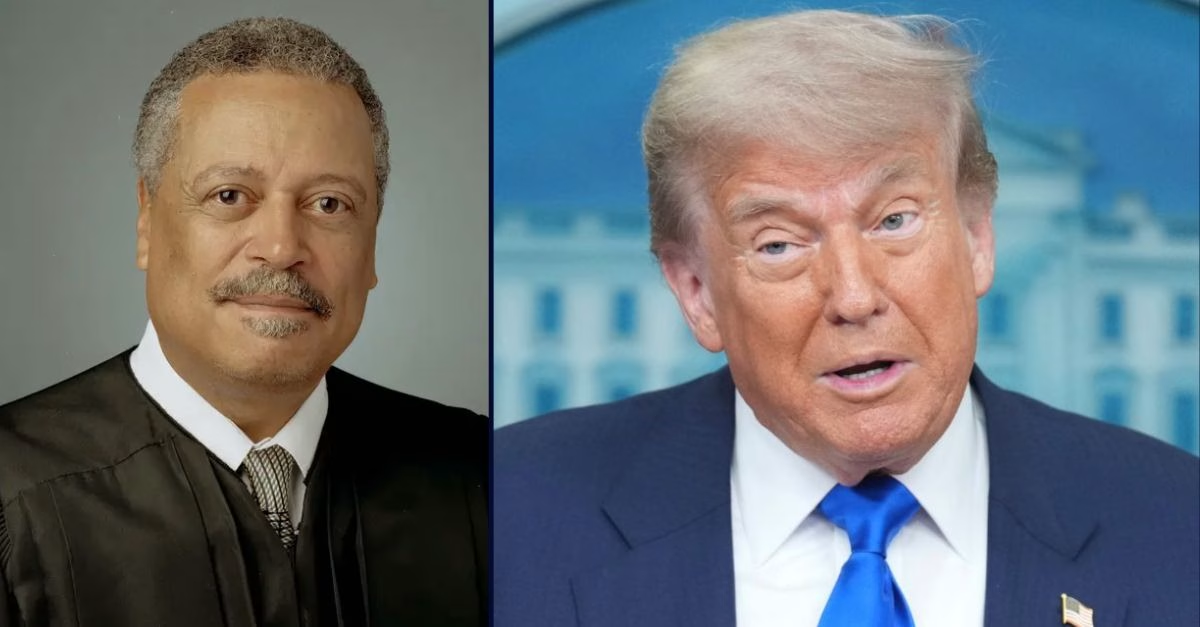
For months, the fight over the Epstein files has been a slow, grinding battle between a journalist demanding transparency and a Justice Department that keeps finding new ways to stall. But this week, something shifted. A federal judge in Washington, D.C. — Judge Emmet Sullivan, a man known for his intolerance of government gamesmanship — issued an order that could finally crack open the vault.
And make no mistake: this moment matters. Because justice matters.
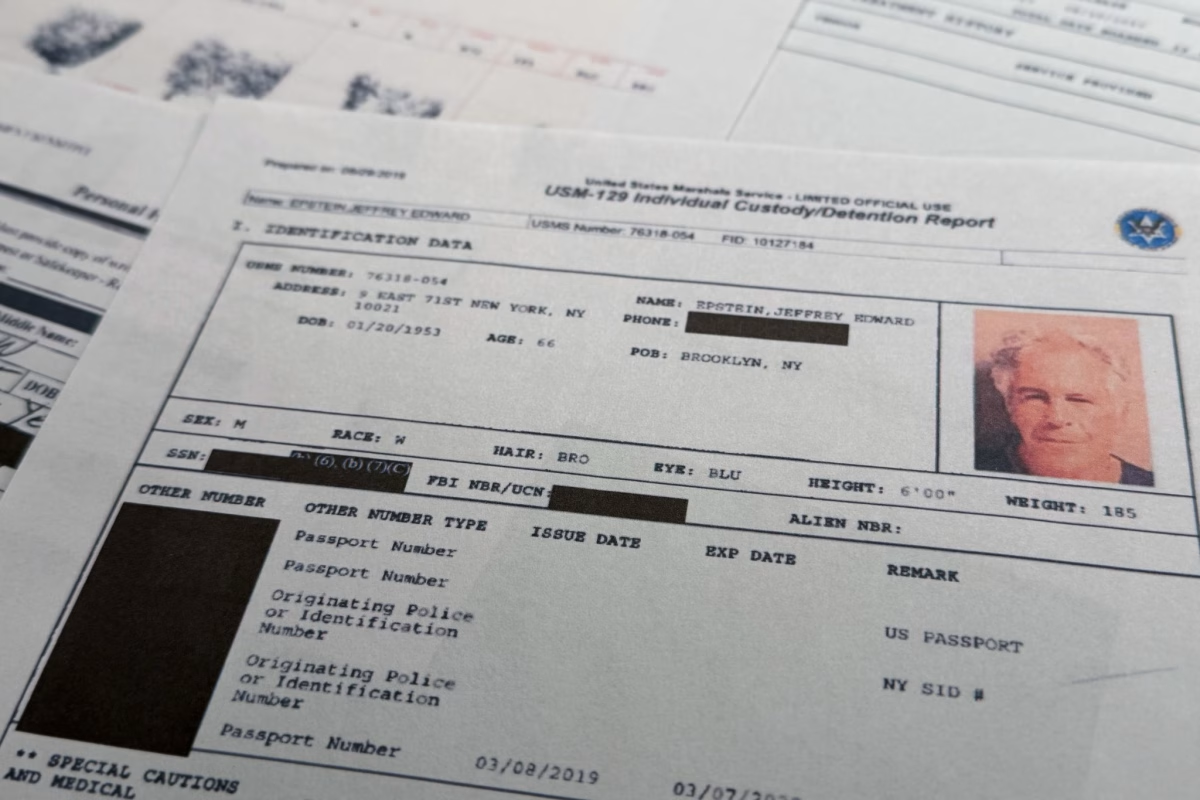
Independent journalist Katie Fang has been pushing this boulder uphill since December 19th — the legal deadline for the Department of Justice to release the Epstein files in full, with only victim‑protective redactions. Instead, acting Attorney General Todd Blanch ignored the law, ignored the deadline, and ignored the basic obligation not to revictimize the very people the system failed. He withheld documents, slapped questionable redactions across others, and even published hundreds of victims’ names and identifying details. Driver’s licenses. Personal information. The kind of exposure that retraumatizes people who have already endured the unimaginable.
So Fang sued. Not for politics, not for spectacle — but for compliance with federal law. For transparency. For the truth.
And now Judge Sullivan has stepped in.
His new order is short, but it lands like a hammer. He’s demanding unredacted copies of specific Epstein‑related documents — emails, communications, internal records — along with proof that the redactions DOJ applied were legitimate. Not excuses. Not vague assurances. Documentation.
In plain English, Sullivan is saying: I don’t trust you, Todd. Show me your work.
That sentence carries weight. For decades, DOJ prosecutors operated under what was called the “presumption of regularity.” Judges trusted their representations. When prosecutors said a redaction protected a victim or a law enforcement officer, courts generally accepted it. That trust was earned through candor, accuracy, and a duty to the truth.
But that era is gone. Years of misrepresentations, political interference, and sloppy or deceptive filings have eroded the credibility of government lawyers. Judges across the country have caught DOJ officials stretching facts, hiding evidence, or outright lying. Sullivan has seen enough.
His order makes clear he’s not taking DOJ’s word for anything. If Blanch claims a redacted name belongs to a victim, Sullivan wants proof. If Blanch claims a redacted email address belongs to law enforcement, Sullivan wants proof. If Blanch claims certain individuals were innocent bystanders rather than co‑conspirators, Sullivan wants proof.
And he wants it now.
The question hanging over all of this is simple: Will DOJ comply? Or will Todd Blanch defy a federal judge?

Mein Kampf & Trump — Available on Amazon
Anyone familiar with Sullivan knows that defiance would be a catastrophic mistake. He is famously tough on prosecutors who play games. He does not tolerate evasiveness, half‑truths, or slick lawyering. If he senses deception, he calls it out — loudly. And if DOJ tries to stonewall him here, he has tools: sanctions, contempt orders, even a “show cause” hearing that forces officials to explain, under oath, why they should not be punished.
But the deeper significance of Sullivan’s order goes beyond the immediate fight. If DOJ hands over these unredacted documents — and the supporting evidence behind every redaction — the court will finally have the raw material needed to determine what must be disclosed under the Epstein Files Transparency Act. Fang has already asked for a special master to take possession of the files and sort truth from cover‑up. Sullivan’s order is the first real step toward making that possible.
For the victims, this moment is overdue. For the public, it’s essential. And for the people who have spent years protecting predators and hiding the truth, it’s a warning.
Judge Sullivan is done with excuses. The era of blind trust is over. And the Epstein files may finally be on the verge of seeing daylight.
SpaceX Plunges 36% From Its Post‑IPO High — And the Real Freefall May Still Be Ahead
The Supreme Court Helped Create a More Violent Nation: Now They Want Safety Money
As Trump’s Iran War Drags On, He Revives His Debunked 2020 Narratives in Primetime Address