
By Ben Emos | Thursday June 18 2026 | 5 min read
For a brief moment, it looked like SpaceX could do no wrong.
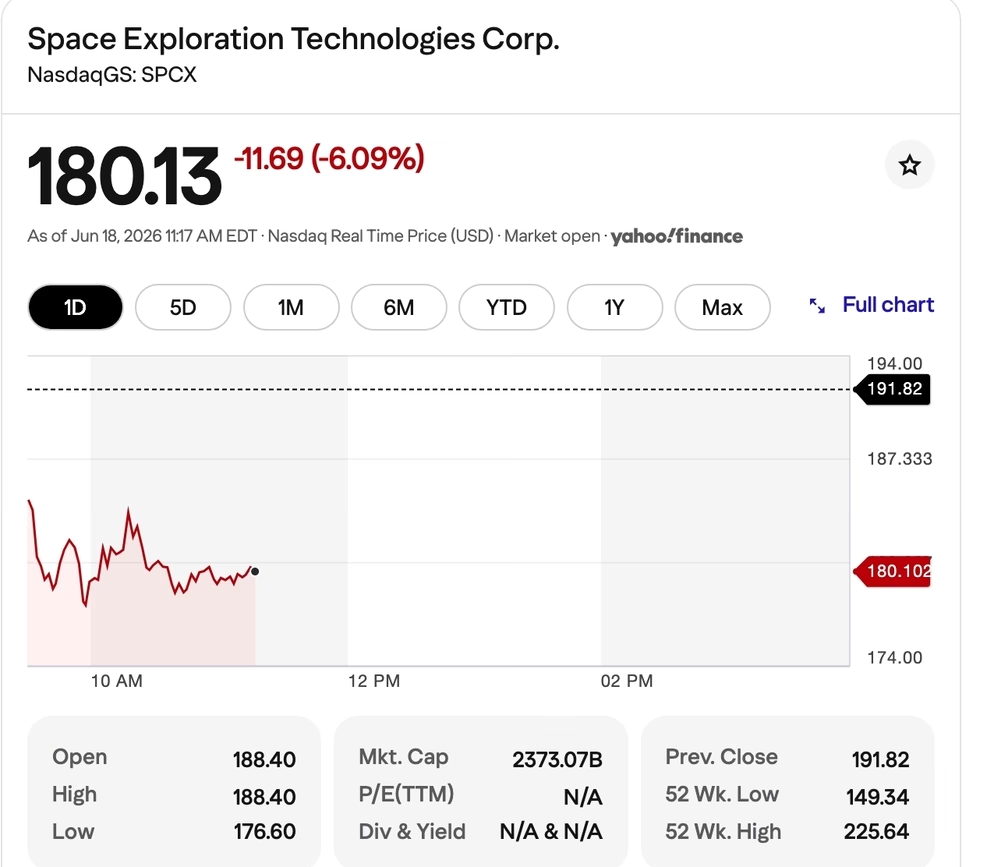
After surging past the $200 mark and briefly touching $210, shares of SpaceX (NASDAQ: SPCX) appeared unstoppable. Retail investors celebrated what many viewed as the next great growth story, and Elon Musk’s wealth ballooned alongside the stock’s meteoric rise. But Wall Street has a way of humbling even the hottest trades.
On Tuesday morning, the mood shifted dramatically.
SpaceX shares slid roughly 6% to around $190 after closing at $201.80 just a day earlier. The sudden pullback has investors asking a question that seemed almost unthinkable only days ago: Is the rally already running out of steam?
From Euphoria to Doubt
The speed of the sentiment reversal has been striking.
Just days ago, online forums were flooded with bullish predictions. Retail traders described the newly public company as a once-in-a-generation opportunity. One widely shared post called the stock “free money” for anyone who understood the business.
Today, the conversation looks very different.
Instead of celebrating unlimited upside, investors are debating valuation, earnings prospects, and whether the market got ahead of itself. Social sentiment metrics have fallen sharply, reflecting a growing sense of caution among the same crowd that helped fuel the initial surge.
This shift doesn’t necessarily mean investors have turned bearish on SpaceX. Rather, it suggests reality is beginning to catch up with excitement.
And that’s often what happens after a major IPO.
Bulls argue that many investors are still misunderstanding the company.
SpaceX is often viewed primarily as a space-launch business, but supporters see something much larger. Between satellite communications, defense contracts, launch services, and the rapidly expanding Starlink network, the company has positioned itself across multiple high-growth sectors.
That broader vision is what continues to attract institutional believers.
The argument is simple: if Starlink becomes the dominant global satellite internet platform and SpaceX continues expanding its infrastructure footprint, today’s valuation may eventually look conservative.
For long-term investors, that’s the dream.
The problem is that dreams don’t always align with short-term market behavior.
The Profitability Problem
While enthusiasm remains high, one issue keeps resurfacing: profits.
Despite its enormous valuation and global brand recognition, SpaceX is not currently profitable. That reality complicates the company’s path toward inclusion in major indexes such as the S&P 500.
For many investors, index inclusion represents a potential catalyst. Once a company joins a major benchmark, passive investment funds are often forced to buy shares, creating additional demand.
But that scenario may not arrive anytime soon.
Current S&P 500 rules generally require positive GAAP earnings over both the most recent quarter and the trailing four quarters. Until SpaceX clears that hurdle, automatic inflows from one of the market’s most important indexes remain out of reach.
The NASDAQ 100 offers a more realistic possibility because profitability isn’t a requirement. Even there, however, newly listed companies rarely receive immediate inclusion.
Investors hoping for a quick boost from passive fund buying may need considerably more patience than expected.
Elon Musk’s Biggest Wealth Engine
The stakes extend beyond the company itself.
SpaceX has become the most important asset in Elon Musk’s portfolio and the primary driver behind his record-breaking net worth. Every major move in SPCX shares has a direct impact on Musk’s fortune.
That connection adds another layer of scrutiny.
When SpaceX rises, headlines focus on Musk’s growing wealth. When shares retreat, investors begin questioning whether expectations have become excessive.
For a company that spent years operating outside public markets, that kind of attention is a new reality.
What Happens Next?
The answer depends on whether this week’s decline proves to be a healthy pause or the beginning of a deeper correction.
Momentum stocks often experience violent swings during the early stages of price discovery, especially when retail participation is elevated. SpaceX appears to fit that description perfectly.

Mein Kampf & Trump — Available on Amazon
The long-term story surrounding Starlink, artificial intelligence connectivity, and global communications infrastructure remains intact. Yet investors are increasingly weighing those opportunities against current fundamentals, profitability concerns, and a valuation that already assumes significant future success.
For now, the market appears caught between two competing narratives: the belief that SpaceX represents one of the most transformative companies of the next decade, and the concern that expectations may have raced ahead of reality.
The coming weeks will reveal which side wins that argument.
Until then, SpaceX remains exactly what it has become since its public debut: one of the most exciting—and unpredictable—stocks on the market.
Trump’s Iran Deal Faces Criticism as Questions Mount Over the Outcome of the Conflict
Trump and Netanyahu Are Discovering They’ve Become Political Liabilities to Each Other
FIFA Boss Gianni Infantino Stood With Trump While the 2026 World Cup Shut Out the World
FIFA Boss Gianni Infantino Stood With Trump While the 2026 World Cup Shut Out the World
The Kennedy Center Just Dropped Trump’s Name — And the Message Is Unmistakable