
By Andrew James | Sunday June 21 2026 | 5 min read
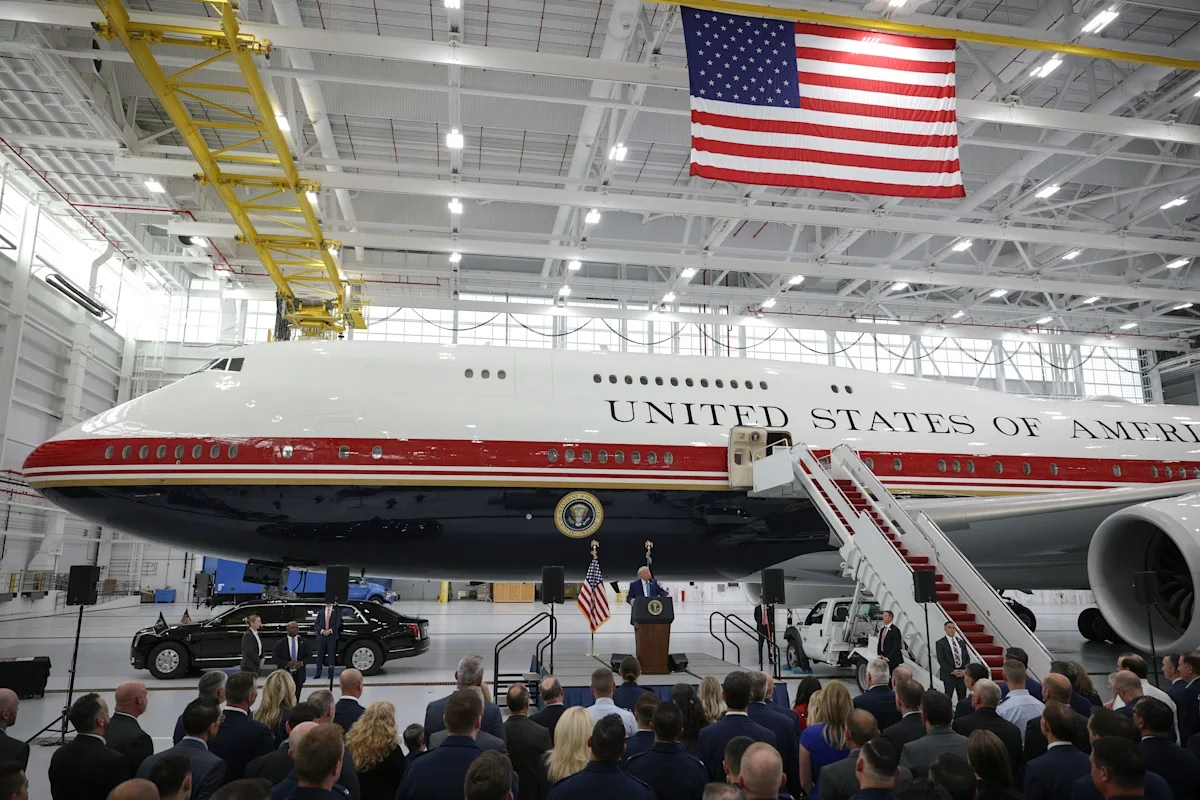
Donald Trump has always treated the presidency as if it were a personal franchise, a four‑year lease with perks he could cash in long after the job ended. But his latest claim — that Qatar “gave” a state‑of‑the‑art aircraft to the United States with the understanding that he could take it home when he left office — crosses into a new realm of entitlement. It’s the kind of story that sounds like a punchline until you remember he’s serious. And when you add the detail he conveniently leaves out — that more than $400 million in U.S. taxpayer money was poured into revamping that aircraft — the whole thing stops being absurd and starts being offensive.
Let’s be blunt. A president doesn’t get to walk off with government property. Not a plane. Not a desk. Not a box of classified documents. Not anything purchased, maintained, or upgraded with public funds. The law is not ambiguous. It doesn’t care about private understandings, foreign intentions, or the mythology Trump builds around himself. If Qatar handed the aircraft to the United States, then it belongs to the United States. Full stop. And once taxpayers footed the bill for its overhaul, the idea that it could be treated as a personal parting gift becomes an insult to every person who paid into the system.
Trump frames the story as if the presidency were a personal brand partnership — Qatar gives the U.S. a plane, the U.S. gives Trump the keys. But the presidency is not a loyalty program. It’s not a rewards card. It’s a public office bound by rules that exist precisely to prevent this kind of self‑dealing. The Emoluments Clause exists for a reason. Federal property law exists for a reason. Appropriations law exists for a reason. They all point to the same conclusion: a president cannot accept a foreign gift for personal use, cannot convert public property into private property, and cannot rewrite the rules on the way out the door.
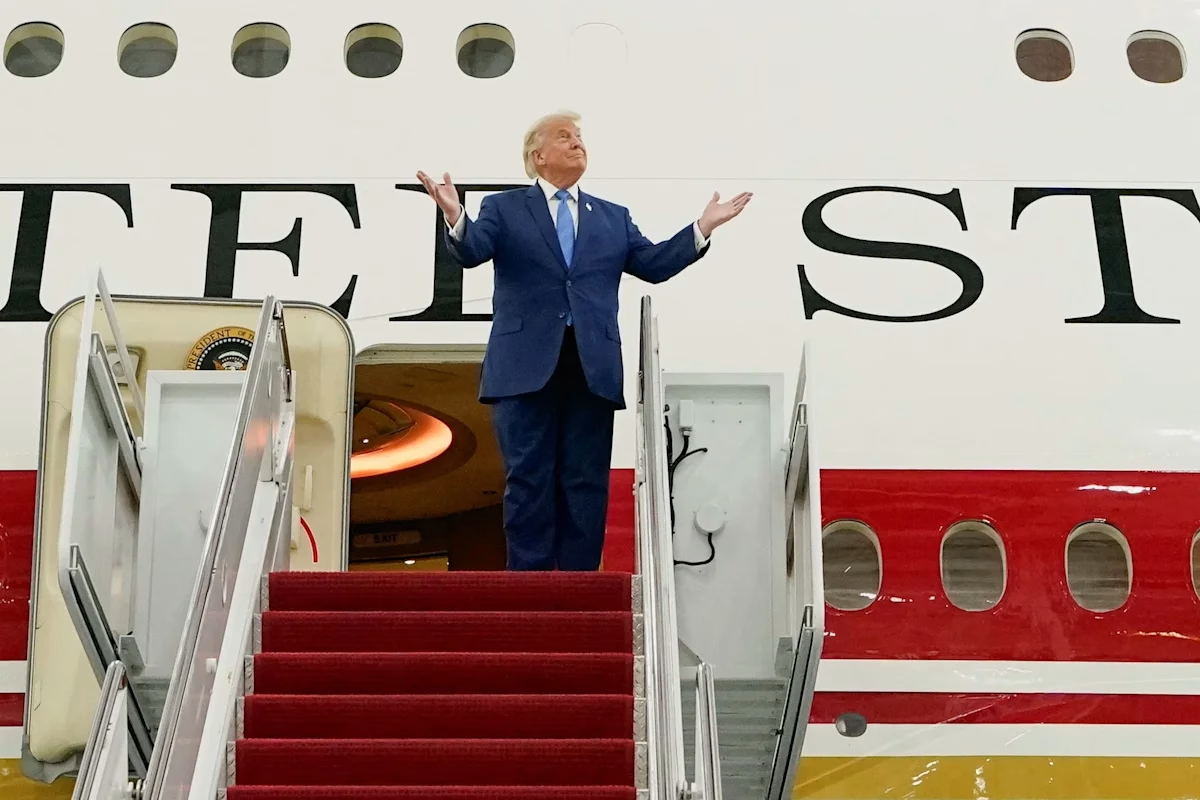
And the agencies that manage federal assets are not confused about this. The General Services Administration doesn’t care about Trump’s narrative. The FAA doesn’t care about his personal expectations. Customs and Border Protection doesn’t care about his sense of entitlement. These agencies operate on paperwork, registration, and ownership — not vibes. If the aircraft is U.S. government property, then it stays U.S. government property. No executive order can magically transform it into a personal souvenir.

Mein Kampf & Trump — Available on Amazon
What makes this story even more galling is the human reality behind that $400 million. That money didn’t fall from the sky. It came from workers who will never fly private, never sit in a leather‑wrapped cabin, never sip champagne at 40,000 feet. It came from teachers, nurses, mechanics, soldiers, retirees — people who pay taxes because they believe, however reluctantly, that their money supports the country, not the vanity of a single man. They paid for an aircraft that belongs to the nation, not to a former officeholder with a taste for luxury.
So when Trump suggests he was entitled to take the plane with him, he’s not just bending the truth. He’s erasing the public from the equation. He’s pretending the aircraft was his all along, that the United States was merely a middleman, that the taxpayers who funded the overhaul were irrelevant. It’s a story built on the assumption that public property becomes private property if he says so loudly enough.
But the law doesn’t work that way. Ownership doesn’t work that way. Democracy doesn’t work that way. A new president wouldn’t need to “block” Trump from taking the plane. There is nothing to block. The aircraft belongs to the American people, and the American people don’t owe Donald Trump a $400 million parting gift.
This isn’t a dispute about aviation. It’s a test of whether public assets remain public — or whether a president can rewrite the rules of ownership by sheer force of ego. And on that question, the law is mercilessly clear.
Haberman and Swan’s Regime Change Revives Debate Over Trump’s View of Power
SpaceX Crosses $200 Milestone, Then Stumbles: What’s Behind the Investor Jitters?
Trump’s Iran Deal Faces Criticism as Questions Mount Over the Outcome of the Conflict
Trump and Netanyahu Are Discovering They’ve Become Political Liabilities to Each Other
FIFA Boss Gianni Infantino Stood With Trump While the 2026 World Cup Shut Out the World