
By Ben Emos | Tuesday May 19 2026 | 4 min read
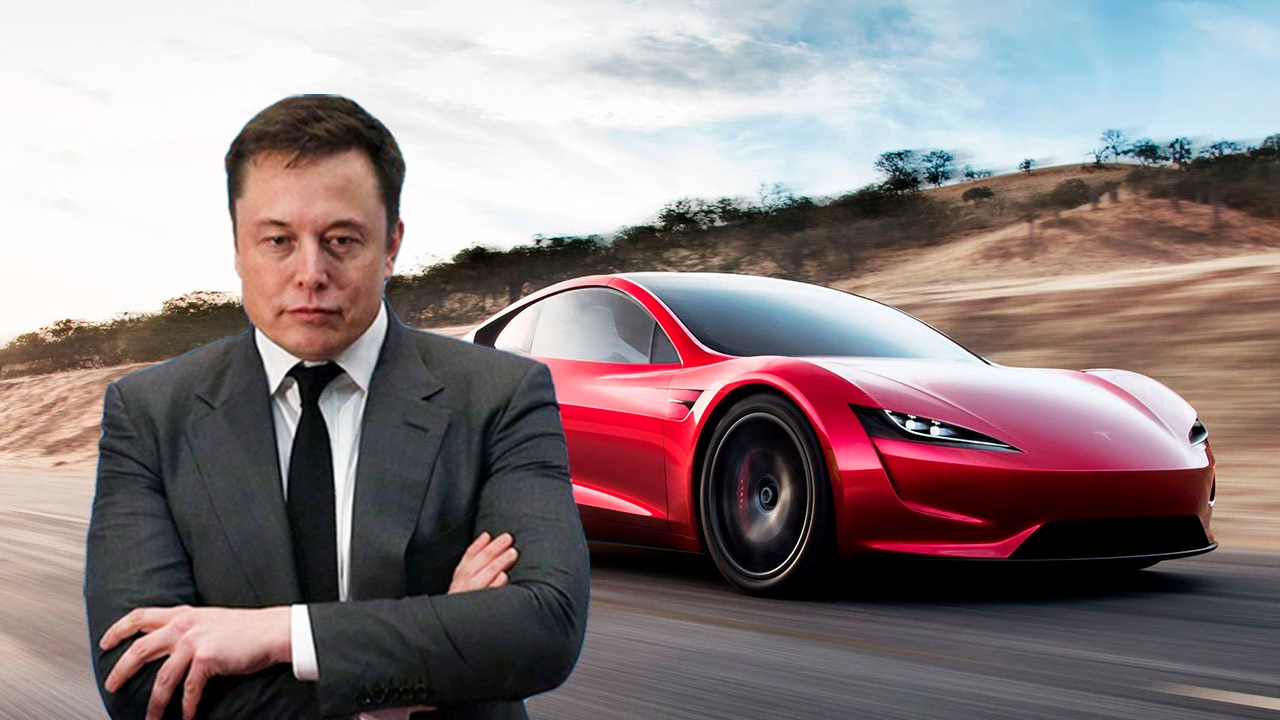
When Elon Musk stood on stage in Davos, he did what he often does best: make a bold promise that grabs headlines. Tesla’s supervised Full Self-Driving system, he said, could win regulatory approval in Europe “as early as next month.” It was the kind of statement designed to energize investors and reinforce the company’s aura of inevitability—especially coming on the heels of a massive compensation package that had already raised eyebrows.
But away from the spotlight, the reality in Europe looks far less dramatic—and far more grounded.
Regulators aren’t dealing in hype. They’re dealing in definitions, testing, and responsibility. And on April 10, 2026, the Dutch vehicle authority, RDW, made its position unmistakably clear. Tesla’s system—branded “Full Self-Driving”—is not self-driving. Not close.
What Tesla received approval for is officially classified as “FSD Supervised,” a driver-assistance system that has undergone more than a year and a half of testing on public roads and controlled tracks. It can support the driver, yes. It can enhance safety when used properly. But it does not replace the human behind the wheel.
The distinction matters. A lot.
According to RDW, the driver must remain fully engaged at all times. Hands ready. Eyes on the road. The system monitors both. If anything, the approval reinforces a point regulators have been making for years: the technology isn’t autonomous, and the responsibility doesn’t shift.
That stands in sharp contrast to the narrative often coming from Tesla itself. The name “Full Self-Driving” suggests a capability that simply doesn’t exist—not in Europe, and not under the conditions regulators are willing to approve. Even in its most advanced form, this is still assisted driving. The human remains in charge.
And that gap between branding and reality is starting to show.
In the Netherlands, Tesla has quietly removed Basic Autopilot from its configurator. New buyers no longer get standard assisted driving features included. Instead, they’re pushed toward a paid model—either a €99 monthly subscription or a €7,500 one-time fee for FSD Supervised. At the same time, Denmark is phasing out the one-time purchase option altogether.
On paper, this looks like a product shift. In practice, it reads more like a repositioning—one that comes as Tesla faces growing friction in Europe over what its technology can actually do.
Because Europe isn’t Silicon Valley. Regulators here are cautious, methodical, and—above all—focused on safety. They don’t respond to branding. They respond to evidence.
That’s why RDW’s language is so deliberate. The system “supports the driver.” The driver “remains responsible.” The car does not drive itself.
A similar approach is evident in China. Tesla only has “partial approval” there, and key capabilities remain restricted compared with the U.S. version. This mirrors what European regulators have also emphasized: despite the branding, “FSD Supervised” is not self-driving.
It’s not a rejection of innovation. It’s a refusal to blur the line between assistance and autonomy.
For investors, this is where the story gets more complicated. The value of Tesla’s future has long been tied to the promise of true self-driving technology—a breakthrough that could transform transportation, unlock new revenue streams, and justify sky-high expectations.
But that future depends not just on engineering, but on approval. And approval depends on trust.
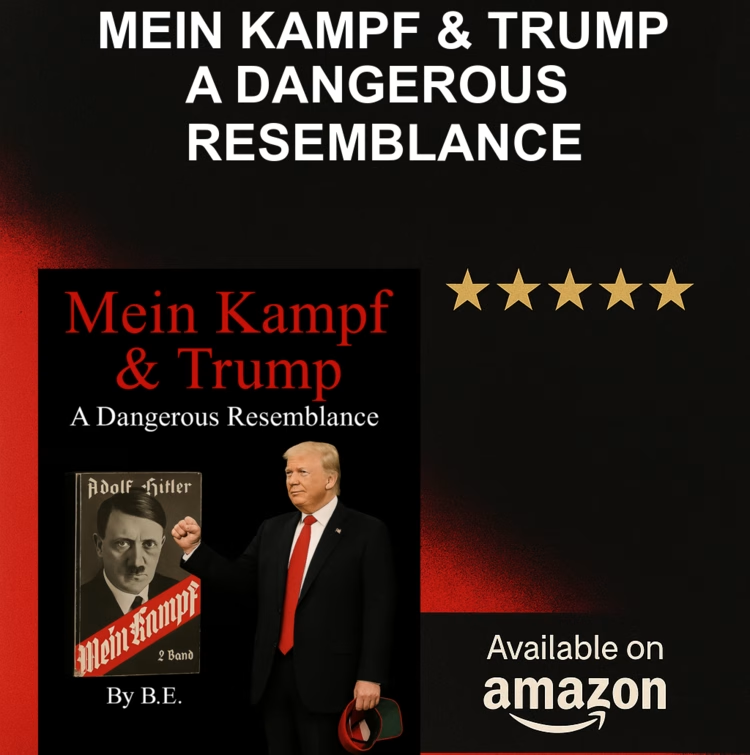
Mein Kampf & Trump — Available on Amazon
Right now, regulators in Europe and China are drawing a firm line. They’re open to advanced driver-assistance systems, but they’re not willing to approve the idea that a car can fully take over. That position isn’t likely to shift because of political pressure—even if Donald Trump tries to push countries toward accepting Tesla’s self-described “Autopilot” or risk losing access to the market.
That doesn’t mean Tesla’s technology has no value. It means the timeline—and the framing—may be very different from what’s being presented on stage.
And that matters, because in markets, perception can move quickly. But reality has a way of catching up.
In Europe, at least for now, the message is clear: this isn’t self-driving. It’s supervised driving. And the driver is still very much in control.
Blood to Ballrooms: How Trump Turned Assassination Attempts Into Power and Profit
Justice Thomas Helped Dismantle the Voting Rights Protections His Parents Once Needed
Former FBI Director James Comey Charged Over Alleged Threat in ‘8647’ Seashell Post
The Cole Allen Case and Its Potential Risks for DOJ Handling of Epstein-Related Files
Trump fires back: “I’m not a rapist or pedophile” in response to Cole Allen-linked manifesto