
By Don Terry & Ben Emos | Tuesday June 16 2026 | 4 min read
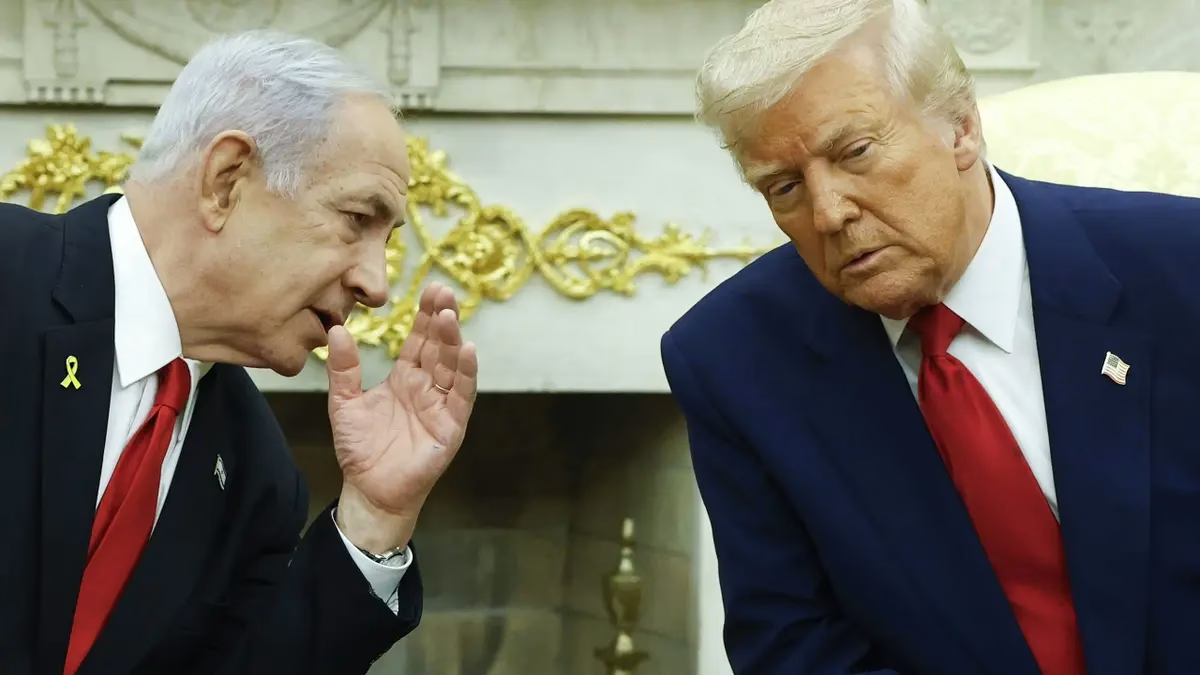
For years, Donald Trump and Benjamin Netanyahu treated each other as political assets—two leaders who saw in the other a reflection of their own instincts, ambitions, and grievances. They were mirror images: populists who bulldozed norms, rewrote the boundaries of executive power, and convinced their supporters that institutions were obstacles rather than guardrails. But now, the connecting tissue that once bound them is beginning to rot. What once looked like a mutually beneficial alliance is curdling into something far more volatile: two embattled leaders discovering that they may be liabilities to each other.
Netanyahu enters this moment carrying the weight of an indictment from the International Criminal Court, accused of war crimes against Palestinians. The world sees him through that lens—isolated, defiant, and increasingly desperate. Trump, meanwhile, sees Netanyahu not as a moral burden but as a political instrument, someone he once believed he could shape, flatter, and deploy when it suited him. Their partnership was never built on trust or ideology. It was built on utility. And utility has an expiration date.
Their relationship deepened in 2018, when Netanyahu helped coax Trump into abandoning the Iran nuclear deal. That decision—hailed by both men as a show of strength—set off a chain reaction that accelerated Iran’s nuclear program and allowed Tehran to accumulate enough highly enriched uranium for multiple nuclear weapons. It was a strategic miscalculation disguised as bravado.
By February of this year, according to extensive reporting in the US press, Netanyahu was again whispering in Trump’s ear. This time, he pushed the idea that war with Iran was not only necessary but winnable. He portrayed Iran as a collapsing state, its economy in shambles, its Revolutionary Guards weakened, its people on the brink of revolt. With the help of Mossad director David Barnea, Netanyahu painted a picture of a regime so brittle that a joint US‑Israeli strike would topple it in days.
Trump listened. And on 28 February, the two leaders launched a devastating assault on Iran that brought the Gulf to a standstill. In that moment, they bound their political fates together more tightly than ever before.
But the war did not unfold the way Netanyahu promised. Iran did not crumble. The Revolutionary Guards did not scatter. Instead, they struck back with precision and force, hitting US bases, targeting Gulf monarchies, and closing the Strait of Hormuz. A global economic crisis followed. The fantasy of a quick, decisive victory evaporated.
By late March, Trump’s frustration was visible. He stopped mentioning Netanyahu in his upbeat public statements about the war. When US negotiators began talking to Iranian officials and Pakistani mediators ahead of a ceasefire, Israel was left out entirely. Israeli officials complained to the press that they had to rely on intelligence intercepts just to understand what the Americans were discussing.
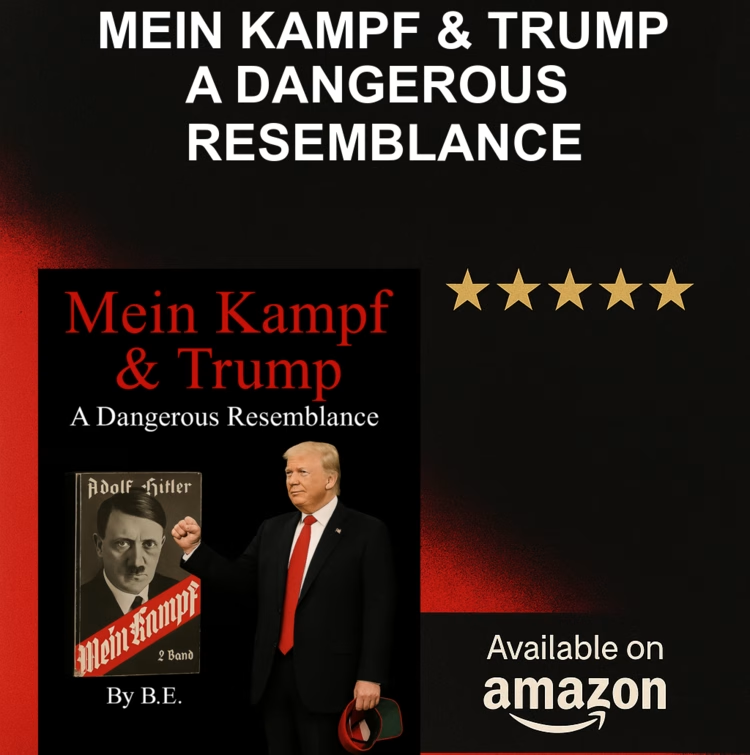
Mein Kampf & Trump — Available on Amazon
The ceasefire negotiations revealed the widening rift. Issues central to Israel—Iran’s missile arsenal, its regional proxies—were not even on the table. When Trump did mention Netanyahu, it was often to scold him. After Israel bombed Iran’s South Pars gas field, Trump publicly rebuked him, saying he had told Netanyahu “not to do that.” The message was unmistakable: the partnership was no longer one of equals.
And when the ceasefire was finally announced, Trump initially echoed Netanyahu’s interpretation that Lebanon was excluded—only to reverse himself hours later, forcing Israel to comply. It was a humiliating moment for a leader who once prided himself on his ability to influence Washington.
What’s left now is a partnership hollowed out by miscalculation and mutual disappointment. Netanyahu, long accustomed to shaping US policy, finds himself sidelined. Trump, who once saw Netanyahu as a political asset, now sees only risk. Their alliance, once sold as a strategic bond, has become a burden neither man knows how to shed.
FIFA Boss Gianni Infantino Stood With Trump While the 2026 World Cup Shut Out the World
The Kennedy Center Just Dropped Trump’s Name — And the Message Is Unmistakable
Elon Musk’s SpaceX IPO Branded ‘The Universe’s Largest Ponzi Scheme’ as Trump Backs the Venture
Is Elon Musk Jewish? The Confusion Behind the Accusations and the Backlash