
By Jane Lewis | Sunday June 14 2026 | 4 min read
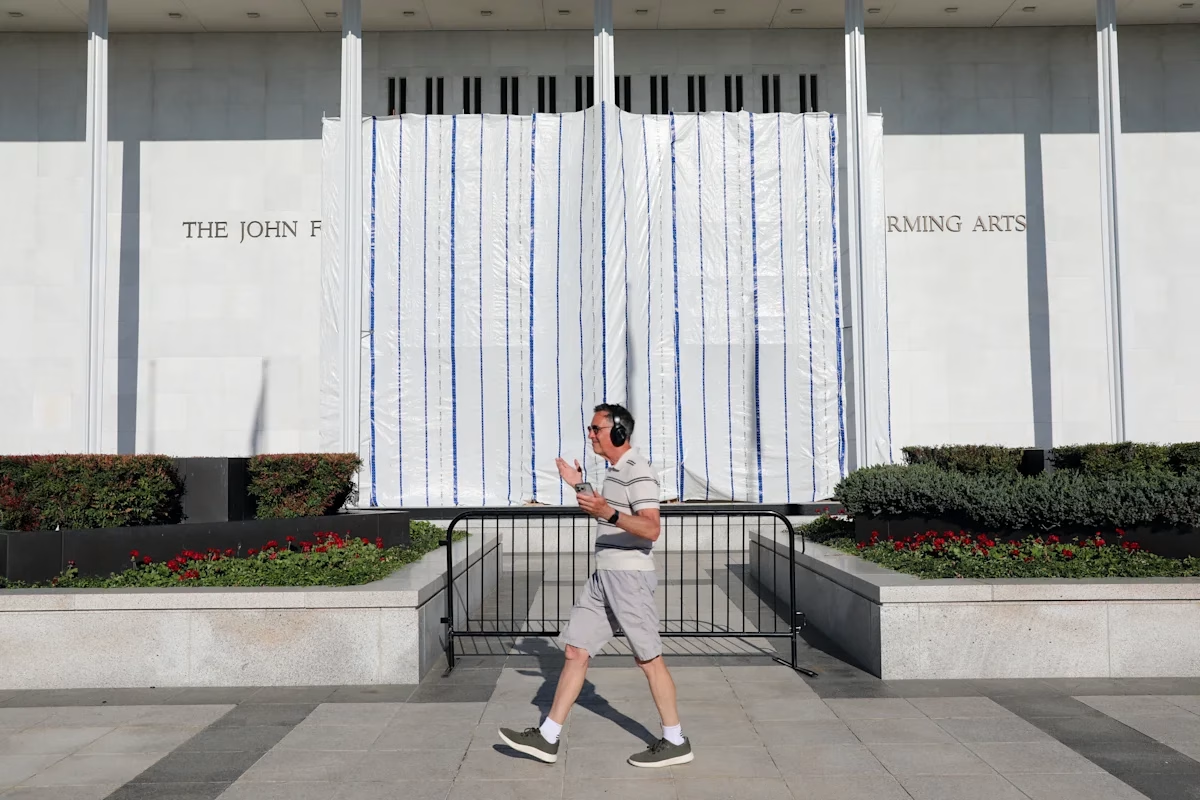
For six months, Donald Trump’s name loomed over the Kennedy Center like a provocation carved into marble. Now it’s gone — stripped down, hauled off, and covered by a white‑and‑blue tarp that flaps in the wind like a surrender flag. The symbolism is impossible to miss. When the statue of Saddam Hussein came crashing down in Baghdad, it marked the end of an era defined by fear and unchecked power. This moment is not that — America is not Iraq, and Trump is not Saddam — but the visual echoes are undeniable. One era ends with a toppled statue; another ends with a name pried off a cultural institution by court order. The common thread is simple: power is never permanent.
And unlike the fall of Saddam, this removal didn’t come from tanks or mobs. It came from the rule of law — the part of American democracy that still functions outside the gravitational pull of the Supreme Court. A federal judge said the renaming was illegal. The Kennedy Center complied. That’s it. No drama, no delay, no political theater. Just the machinery of law doing what it was built to do.
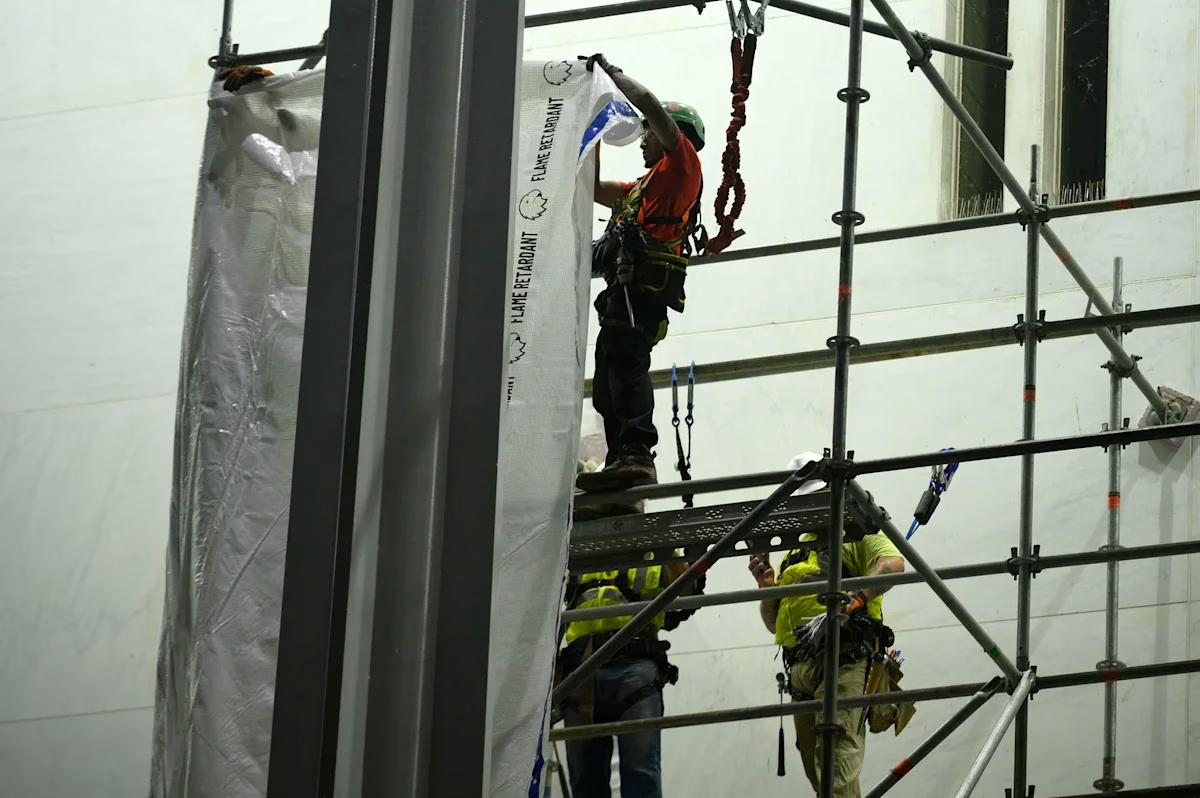
By Saturday morning, crews were already on ladders, unbolting the letters from the portico. Thunderstorms slowed them down, but not for long. The deadline was noon, and the order was clear. When the clouds broke, the workers went back up and finished the job. The tarp went up. The name came down. And the Kennedy Center began the process of erasing the traces.
In a court filing, the Center confirmed it had removed Trump’s name from its website, letterhead, brochures, press releases, contracts, and even employee email signatures. Staff received new ID cards. The trademark application was withdrawn. The institution’s executive director, Matt Floca, signed the compliance certification himself. The message was unmistakable: the Kennedy Center is returning to its rightful identity.
This unwind didn’t happen because of politics. It happened because U.S. District Judge Christopher Cooper — an Obama appointee — ruled that the Trump‑appointed board had acted illegally when it voted last December to rename the building “The Donald J. Trump and John F. Kennedy Memorial Center for the Performing Arts.” The renaming had been slipped into the agenda at the last minute, bypassing the process Congress established decades ago. Cooper’s ruling was blunt: “Congress gave the Kennedy Center its name, and only Congress can change it.”
The Trump administration fought the ruling, appealing the order and asking for delays. They lost. An appeals court refused to pause the removal. A separate judge granted only a brief extension because of the storms. The law held.

Mein Kampf & Trump — Available on Amazon
Trump responded the way Trump always responds — with fury. On Truth Social, he attacked Judge Cooper as “a Barack Hussein Obama Judge” and claimed the judge would be responsible for “Death and Destruction” if anything happened to Washington. He also went after Cooper’s wife, attorney Amy Jeffress, accusing her of a conflict of interest because of her past work at the Justice Department. Then he announced he was cutting ties with the Kennedy Center entirely, declaring it “failing and unsafe” and insisting he was the one walking away.
But the truth is simpler. The Kennedy Center didn’t push Trump out. The law did. And the institution is now scrubbing his name from every corner of its identity because a federal court said it must.
The removal is more than a legal correction. It’s a cultural moment — a reminder that institutions outlast presidents, and that no amount of branding, bluster, or boardroom maneuvering can override the authority of Congress. The Kennedy Center was never Trump’s to rename. Now the façade reflects that reality again.
#kennedycenter #trump #trumpnameremoval
Elon Musk’s SpaceX IPO Branded ‘The Universe’s Largest Ponzi Scheme’ as Trump Backs the Venture
Is Elon Musk Jewish? The Confusion Behind the Accusations and the Backlash
FIFA Should Award Omar Artan $100K in Compensation for World Cup U.S. Ban
Jon Ossoff’s “Something Is Happening in Georgia” Speech Fuels 2028 Presidential Buzz