
By Mary Jones | Wednesday May 28 2026 | 4 min read
There’s a pattern in American politics that’s hard to miss. Presidents go back. They return to where their stories began—sometimes generations before them. They stand in small towns, shake hands, smile for cameras, and say, this is where I come from. It’s powerful. It humanizes them.
Barack Obama did it in Ireland, in Moneygall. He did it again in Kenya. Ronald Reagan stood proudly in Tipperary, embracing his Irish roots. Even Bill Clinton leaned into ancestry—real or not—because politically, it matters.
So here’s the uncomfortable question: why hasn’t Donald Trump done the same?
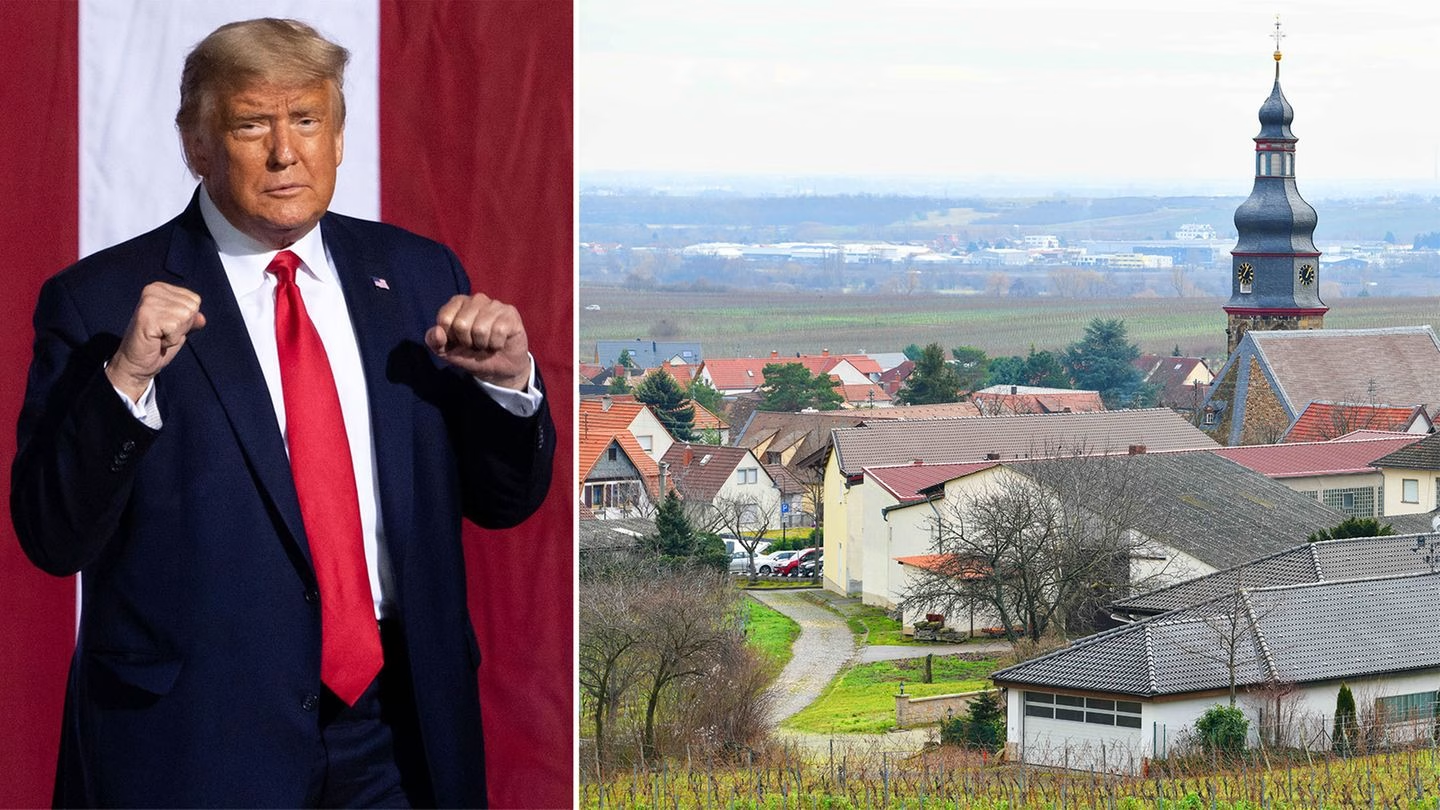
Trump’s grandfather, Friedrich Trump, came from Kallstadt, a quiet village in Germany’s wine country. He wasn’t wealthy. He wasn’t educated in any elite sense. He left Germany at just 16 years old, without college, without money, and without the kind of backing that modern political narratives love to romanticize. He was, by every definition, an immigrant chasing survival.
That alone should be a story worth telling. But it doesn’t get told that way.
Because the full story complicates the image.
Friedrich Trump didn’t just leave Germany—he left under circumstances that later caught up with him. When he tried to return and settle back in his hometown, German authorities refused. Why? Because he had left to avoid mandatory military service. The result was blunt: he was ordered to leave again. He was, effectively, pushed out.
That’s not a clean origin story. That’s not the kind of narrative that fits easily into speeches about strength, loyalty, and national duty.
And it doesn’t end there.
Decades later, during the Vietnam War era, Trump himself avoided military service—another fact that has followed him throughout his public life. The parallels aren’t subtle. A grandfather who left to avoid service. A grandson who did the same under different circumstances. History doesn’t repeat itself perfectly—but sometimes it rhymes loudly enough.
So what happens when a political figure builds a platform around tough immigration policies, hard borders, and strict national identity… while descending from someone who left his country under pressure and wasn’t allowed back?
It creates tension. And tension is something politicians often avoid.
Then there’s the issue of how Trump has spoken about his own family history. At times, even basic facts—like the year of his grandfather’s death during the 1918 flu pandemic—have been misstated. In isolation, that might seem minor. But in the broader context, it raises a bigger question: is this just carelessness, or a pattern of shaping history to fit a narrative?
Because narratives matter.

Mein Kampf & Trump — Available on Amazon
And visiting Kallstadt would force a confrontation with one that doesn’t align neatly with the image Trump has built. It would mean standing in a place that tells a different story—one of migration, rejection, and complicated identity. It would mean acknowledging that the line between “us” and “them” isn’t as clear as political rhetoric often suggests.
Other leaders leaned into their past, even when it was messy. Trump has done the opposite. No visit. No symbolic return. No moment of recognition.
And that absence isn’t invisible.
It stands out precisely because it’s so deliberate.
Maybe it’s easier to celebrate heritage when it reinforces your message. And maybe it’s easier to ignore it when it doesn’t.
But the facts don’t disappear just because they’re inconvenient.
A 16-year-old boy left Kallstadt with nothing. He built a life in America. That story could have been told as one of grit, survival, and opportunity—the kind of story politicians usually embrace.
Instead, it sits quietly in the background.
Untouched. Unvisited.
And the question keeps hanging there, unanswered:
Why hasn’t he gone back?
DOJ Scrubs January 6 Records from Website—Who the Hell Do They Think They’re Fooling?
Trump’s $1.8 Billion DOJ Fund Reignites Controversy Over His January 6 Pardons
Trump’s $1.8 Billion DOJ Fund Looks Less Like Justice—and More Like Appeasement
Is Elon Musk the New Bernie Madoff—Selling Investors and Buyers Empty Promises?