
By Ben Emos | Tuesday, April 14, 2026 | 5 min read
Hungary woke up to a political earthquake, and by nightfall, the streets were filled with celebration. After 16 years under the leadership of Viktor Orbán, voters have delivered a decisive verdict: change.
With turnout reaching nearly 78 percent—an unusually high figure that signals both urgency and engagement—Hungarians showed up in force. Their message was unmistakable. The opposition, led by Péter Magyar and his Tisza party, didn’t just edge out a win; they surged ahead.
Early projections indicate that the Tisza party is not only securing a parliamentary majority but may also reach the critical two-thirds threshold required for a constitutional supermajority. That would mean at least 133 seats—enough to fundamentally reshape Hungary’s political framework. While final results are still being confirmed, momentum appears firmly on their side.
Across the country, scenes of celebration have unfolded. In some places, chants of “Russia go home” echoed through crowds, reflecting a broader sentiment about Hungary’s geopolitical direction. For many voters, this election was about more than domestic policy—it was about identity, alliances, and the country’s place in Europe.
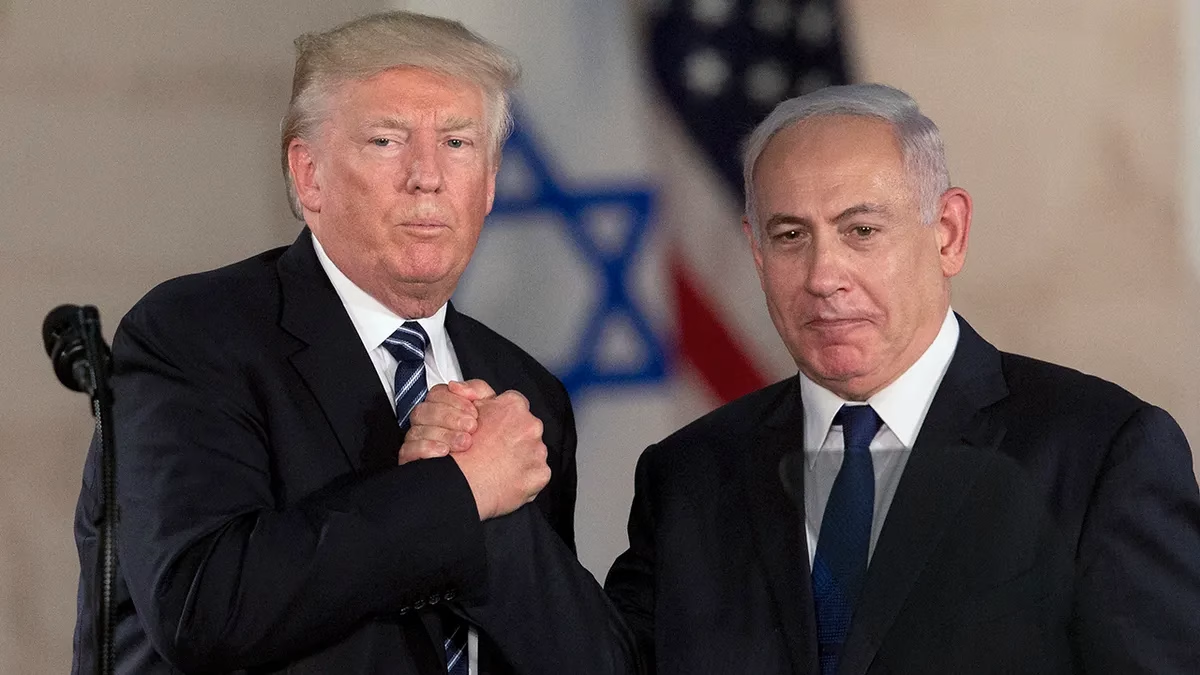
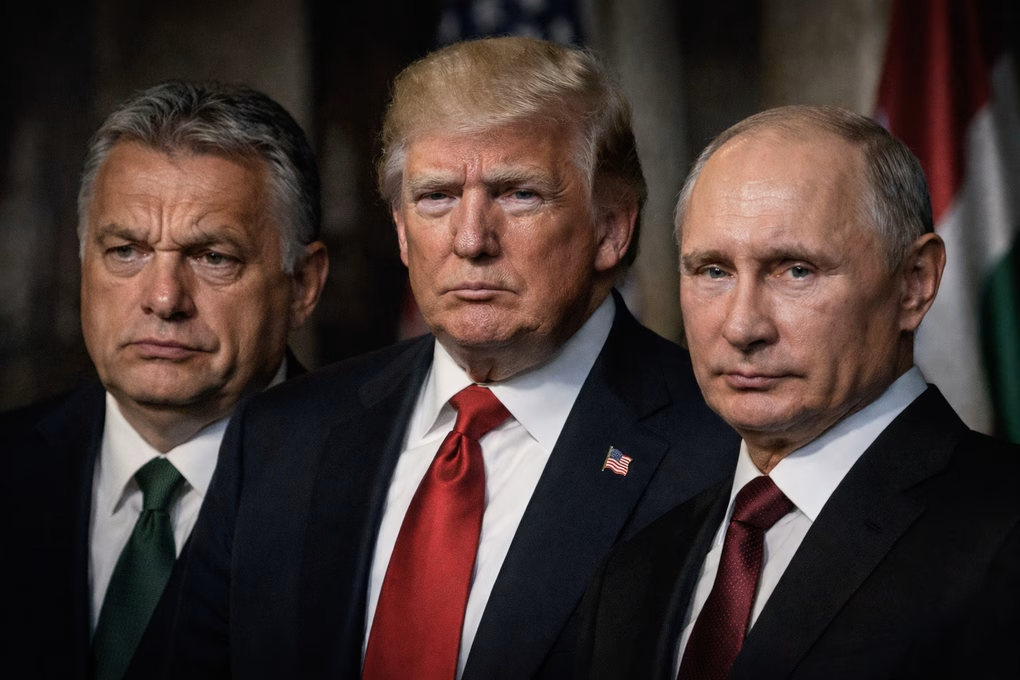
The campaign itself drew international attention. High-profile figures, including Donald Trump and JD Vance, publicly backed Orbán, urging Hungarians to support his continued leadership. Trump, in particular, issued repeated endorsements and even sent a recorded message that circulated widely during the campaign. Marco Rubio also made a visit to Hungary in a show of support.
Meanwhile, conservative groups brought their own influence to bear, hosting events in Budapest and amplifying Orbán’s message. Benjamin Netanyahu also signaled support for the incumbent, adding another layer of international involvement.
Despite these efforts, Hungarian voters appeared to chart their own course.
As results became clear, Orbán moved quickly to concede. In a brief but notable gesture, he personally called Magyar to acknowledge the outcome. In his public remarks, Orbán struck a measured tone, stating that while the results were not yet fully finalized, “they are understandable and clear.” He added that his party would continue to serve the country, even from the opposition.
Magyar, now poised to become Hungary’s next prime minister, has framed the victory as a turning point. Throughout the campaign, he positioned himself as pro-European, pro-democracy, and firmly opposed to closer alignment with Russia. He also challenged claims made by the Orbán government regarding threats from Ukraine, pushing back against narratives that critics described as exaggerated or misleading.
For many observers, this election represents a broader shift in Hungary’s trajectory. Under Orbán, the country often found itself at odds with the European Union, sometimes acting as a brake on collective decisions—particularly those related to Ukraine and Russia. That dynamic could now change significantly.
European leaders were quick to respond. Ursula von der Leyen welcomed the result, writing that “Europe’s heart is beating stronger in Hungary tonight.” In a follow-up message, she emphasized unity, saying Hungary had reaffirmed its European path.
At its core, this election was a choice. Voters weighed competing visions: one that leaned toward nationalist, inward-looking policies and another that emphasized integration with Europe and alignment with democratic allies. By a clear margin, they chose the latter.
What comes next will depend on how the new government translates its mandate into action. If the projected supermajority holds, Magyar and his party will have the rare ability to enact sweeping reforms.
For now, the atmosphere across Hungary isn’t really about policy details—it’s about a sense that something has finally shifted. After more than 15 years of political continuity, people are looking ahead, wondering what comes next, and making it clear they expect change to mean something real this time.
Mein Kampf & Trump — Available on Amazon
As for Viktor Orbán himself, questions are already beginning to swirl. There’s growing attention around investigations into alleged corruption tied to his time in power, and that’s putting his personal future under a harsher spotlight. Some observers are even speculating—quietly, for now—about whether he might one day seek refuge abroad, an ironic twist given his past stance on asylum seekers.
There’s talk that the United States, particularly under Donald Trump, could be a possible destination. But even that comes with uncertainty. Political winds shift quickly, and any such arrangement might only last as long as the administration in power. If leadership changes, so could the calculus around offering protection.
For the moment, though, those questions remain secondary. The bigger story unfolding in Hungary is about a country stepping into unfamiliar territory—one shaped less by the past and more by the expectations of its people.
Melania Trump’s Surprise Speech Ignites Epstein Firestorm and Raises New Questions
High-Stakes Ceasefire in Crisis: Trump’s Iran Deal Unravels Within 24 Hours As Israel Bombs Lebanon
From Threatening Genocide Against Iran to ‘Two More Weeks’ Delay’: Trump’s Dangerous Farce
The Jewish Power Trio Behind the Iran War: Witkoff, Kushner and Netanyahu
Pam Bondi Out, Todd Blanche In: A Drastic Decision Shaped Behind Closed Doors