


By Ben Emos | Sunday, January 11, 2026 | 6 min read
When the Norwegian Nobel Institute made it clear that the Nobel Peace Prize cannot be transferred, shared, or revoked once it has been awarded, it wasn’t just a matter of technicality — it was an important affirmation of how peace prizes are meant to work in the world. The institute’s statement came after Venezuelan opposition leader María Corina Machado suggested she might give or share her 2025 Nobel Peace Prize with former U.S. President Donald Trump in recognition of his role in the operation that led to the capture of Venezuelan president Nicolás Maduro. But the Nobel body stressed that the prize is final and “stands for all time,” leaving no room for recipients to pass it on to others.
Machado’s intention to honor Trump with her Peace Prize might have been heartfelt — or it might have been strategic — but either way it highlights the complexities of politics in a moment when Venezuela is at a crossroads. The Nobel Prize recognizes individual contributions to peace and human rights, honors that are meant to carry moral and symbolic weight. Trying to extend that honor to a political figure at the center of ongoing debate raises questions about what the award represents and who it is meant to lift up.
There are many layers to this story that are troubling to observers watching from both inside and outside Venezuela. Maduro’s capture was a dramatic and controversial event, one that has drawn international attention and criticism. It was framed by some as a step toward ending authoritarian rule, but others worry about the long-term consequences of foreign military involvement and the precedent it sets for international relations. In that context, the desire to celebrate Trump — or any foreign leader — with a peace accolade may reflect both gratitude and a kind of political pandering that risks undermining the independence and meaning of the prize itself.
It’s also worth noting that recent reporting suggests that some of the evidence used to justify the framing of Maduro as a narco-trafficker was not as solid as initially presented, a development that should give anyone pause when assessing the broader narrative. Including the incessant killing of people on boats without evidence. While Maduro now faces charges in New York, questions about the basis for certain claims and the role of external actors in shaping perceptions of the Venezuelan leadership will continue to matter for how the country moves forward.
Another important part of this unfolding story is Venezuela’s vast oil reserves, which have long shaped both its economy and its place in global politics. Venezuela sits on some of the largest proven oil deposits in the world, making energy resources a central factor whenever foreign powers engage with the country. The current situation has put that reality in stark relief.
In recent days, the United States has taken steps to assert control over Venezuelan oil revenue held in U.S. accounts and has actively encouraged major oil companies to consider investing in the country’s oil industry, with assurances about safety and future involvement. Trump administration officials have even discussed large-scale investment plans and protections for U.S. energy firms as part of broader efforts to stabilize Venezuelan oil production.
At the same time, the U.S. government has issued urgent warnings for its citizens to leave Venezuela immediately due to a deteriorating security situation, noting armed groups, known locally as colectivos, setting up roadblocks and searching for Americans or perceived U.S. supporters. Those conditions underscore how complicated and volatile the situation remains on the ground.
When decisions about a nation’s natural resources are made by external actors — particularly under circumstances where ordinary Venezuelans have limited voice in the process — it fuels skepticism and concern. Many Venezuelans have watched their oil wealth become a point of international contention rather than a foundation for domestic prosperity. Policies that appear to shift control of those resources, or that frame oil assets as leverage in broader geopolitical struggles, risk deepening divisions and feeding narratives of exploitation rather than genuine partnership.
This is not just academic. Oil has shaped Venezuela’s fortunes and misfortunes for decades — from the boom years when production was robust to the steep declines that followed sanctions, mismanagement, and underinvestment. Even if external goals are framed as stabilizing or reform-oriented, any perception that foreign interests are dictating terms without meaningful input from Venezuelans can weaken trust and complicate efforts toward national recovery.
In a moment of intense geopolitical pressure and domestic uncertainty, decisions about oil resources will resonate far beyond boardrooms and diplomatic cables. They will affect how Venezuelans see their future, who they believe has a right to shape it, and whether economic recovery feels like a shared project or an imposed bargain.
At home, the question many Venezuelans are now asking is: who speaks for us? Machado’s Nobel accolade was meant to recognize her struggle for democratic rights against a regime widely criticized for repression. But endorsing foreign leaders so publicly — or seeking their validation — can make it harder for any national leader to build the broad, grassroots support needed to guide a fractured society toward stability and self-determination. Leadership in such moments demands not only courage, but a clear sense of whose interests are being served and how to balance gratitude with the responsibility to one’s own people.
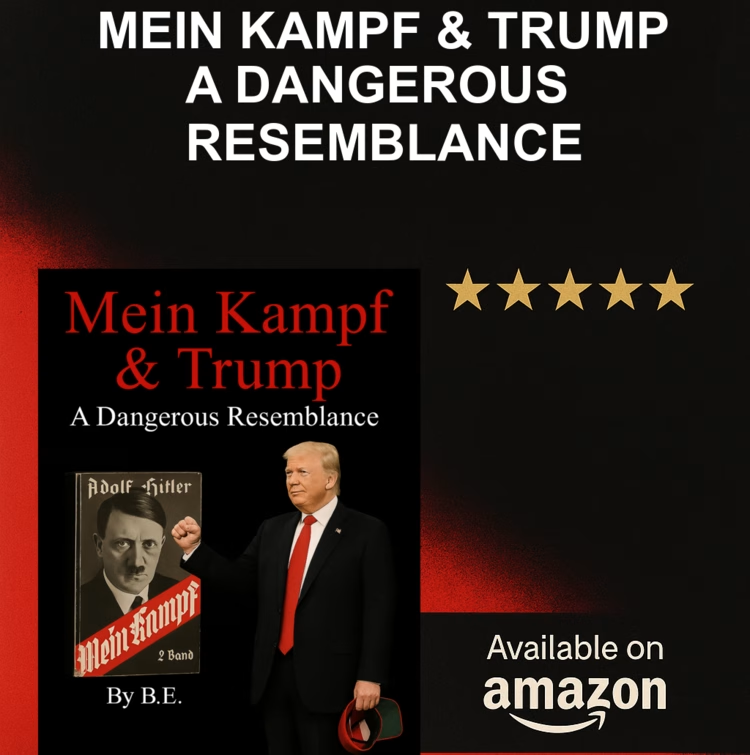
Mein Kampf & Trump Now On AMAZON
The Nobel Institute’s insistence on the permanence of its decision is a reminder that prestigious international honors carry weight precisely because they stand apart from shifting political winds. They are meant to celebrate enduring contributions to peace, not to become bargaining chips in current political contests. That distinction matters, especially when countries are trying to rebuild trust in governance and heal wounds left by years of conflict and authoritarian rule.
Whether Machado’s gesture towards Trump was intended as sincere appreciation or political calculus, the broader lesson is that national leadership requires more than symbolic gestures. It requires clarity about national priorities, accountability to citizens, and careful stewardship of international relationships. Leaders who lose sight of those foundations risk undermining both their legitimacy at home and the very values that institutions like the Nobel Peace Prize seek to uphold.
In the end, the Nobel Institute’s position protects the integrity of the award and underscores a deeper truth: peace and leadership must be built on principles that transcend the moment, not reshaped by the ambitions or accolades of powerful outsiders.