
By Don Terry | Thursday August 13 2026 | 4 min read
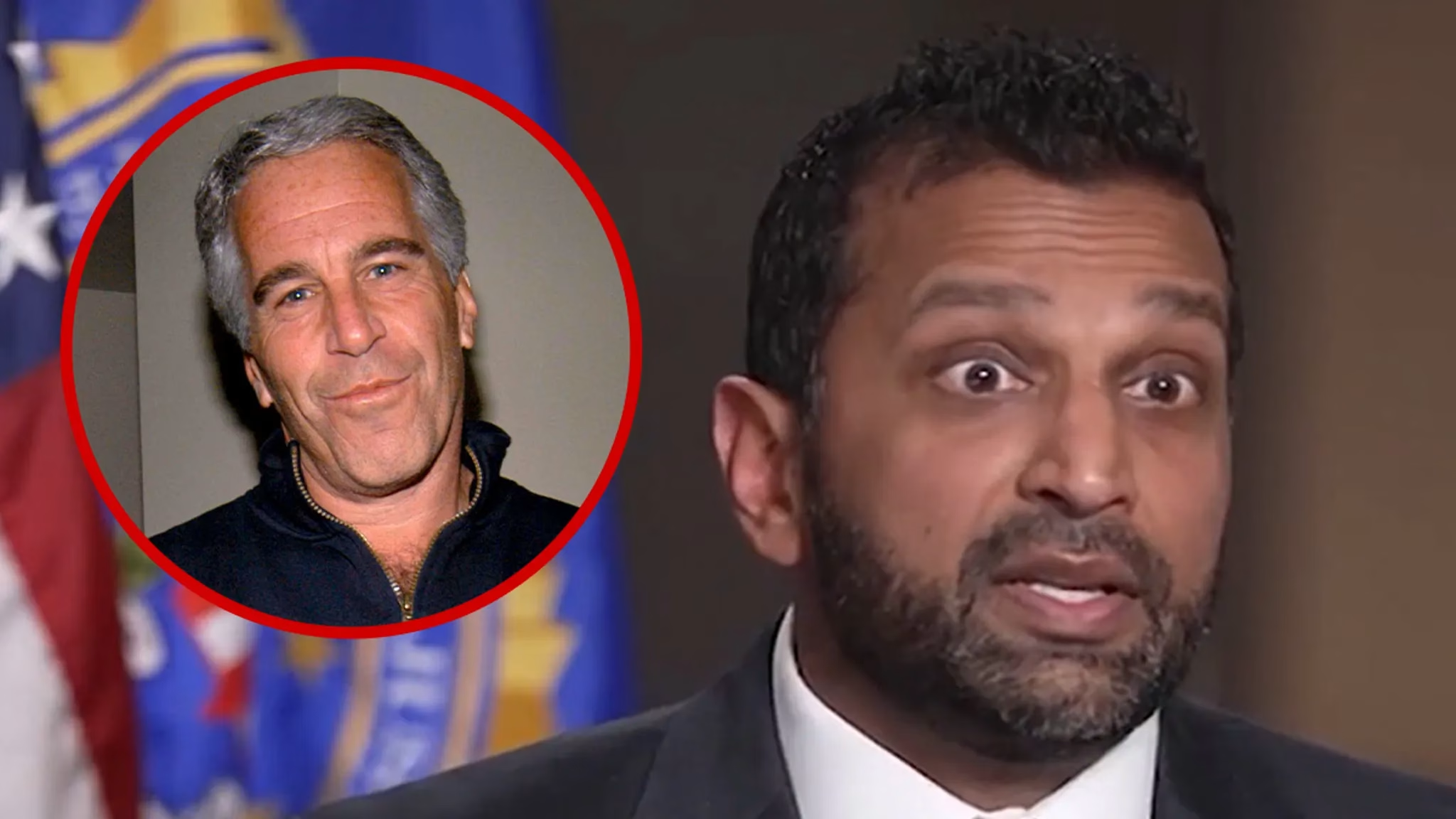
The FBI’s admission didn’t arrive like a press release. It landed like a confession. After months of rumors, anonymous tips, and a year of government stonewalling, the bureau finally acknowledged what insiders had been whispering all along: agents were trained—explicitly, systematically, deliberately—to scrub Donald Trump’s name from the Epstein files before the public ever saw them. Not a suggestion. Not a guideline. A training program.
And the only reason the public knows any of this is because one journalist refused to let the government bury it.
Allison Gill spent a year clawing at the FBI’s walls. She filed a FOIA request. She waited. She was ignored. She sued. She pushed until the bureau had no more room to maneuver. And on Sunday, she finally got what she’d been fighting for: confirmation that the FBI created internal training videos and PowerPoints instructing agents how to identify, log, and mark Trump’s name for redaction. These materials were never released under the FOIA mandate. They were never acknowledged. They were never meant to see daylight.
Gill forced daylight anyway.
What agents described to her wasn’t a routine document review. It was a lockdown operation. They were sealed inside the building for 24‑hour and even 48‑hour shifts, combing through hundreds of thousands of files, videos, and photographs tied to Jeffrey Epstein’s child sex‑trafficking network. They weren’t just scanning for sensitive content. They were hunting for specific names. They were following instructions. They were working off a script.
One of those names, they say, was Donald Trump.
Agents told Gill about an unclassified SharePoint site—a digital staging area where a PowerPoint deck lived. Inside that deck were embedded training videos showing agents exactly how to find Trump’s name, how to log it, how to tag it, and how to prepare it for removal. This wasn’t a rogue analyst freelancing. This wasn’t a handful of employees making judgment calls. This was institutional. It was organized. It was deliberate.
The FBI’s information management division—normally responsible for archiving and cataloging documents—was suddenly repurposed as a censorship unit. Historically, this division doesn’t scrub documents for public release. It doesn’t redact politically sensitive names. It doesn’t prepare files for public consumption. So the bureau built a new system from scratch: training videos, step‑by‑step instructions, Excel spreadsheets to track Trump’s name, page numbers, and document IDs. They created a workflow designed not to preserve truth, but to manage exposure.

Mein Kampf & Trump — Available on Amazon
Even with all that effort, Trump’s name still appeared more than 38,000 times in the initial release. And some of those mentions were explosive. One FBI tip sheet included allegations from an unnamed source claiming Trump forced one of Epstein’s victims—believed to be 13 or 14 years old—to perform oral sex on him “approximately 35 years ago” in New Jersey. That allegation was never prosecuted. But it was documented. And it survived the redaction process.
That survival raises questions the FBI cannot dodge. If Trump’s name was singled out for special handling, how many other names were treated the same way? Who ordered the creation of the training videos? Why were they hidden from the FOIA release? And what else was scrubbed before the public ever had a chance to see it?
Gill’s reporting doesn’t just expose a bureaucratic failure. It exposes a mindset—a belief inside the government that certain truths are too dangerous, too politically volatile, too inconvenient to release without first being sanitized. The Epstein files were supposed to be a reckoning. Instead, they became a controlled burn.
Now that the FBI has admitted the training existed, the story is no longer about rumors. It’s about accountability. It’s about what else the public hasn’t been allowed to see. And it’s about whether the truth can survive a system designed to erase it.
The DOJ Isn’t Just Broken — Trump Has Repurposed It Into His Own Enforcement Arm
Trump Slush Fund Standoff: The $1.8 Billion Heist Pushing Washington to the Brink