

By Andrew James | Friday January 30, 2026 | 4 min read
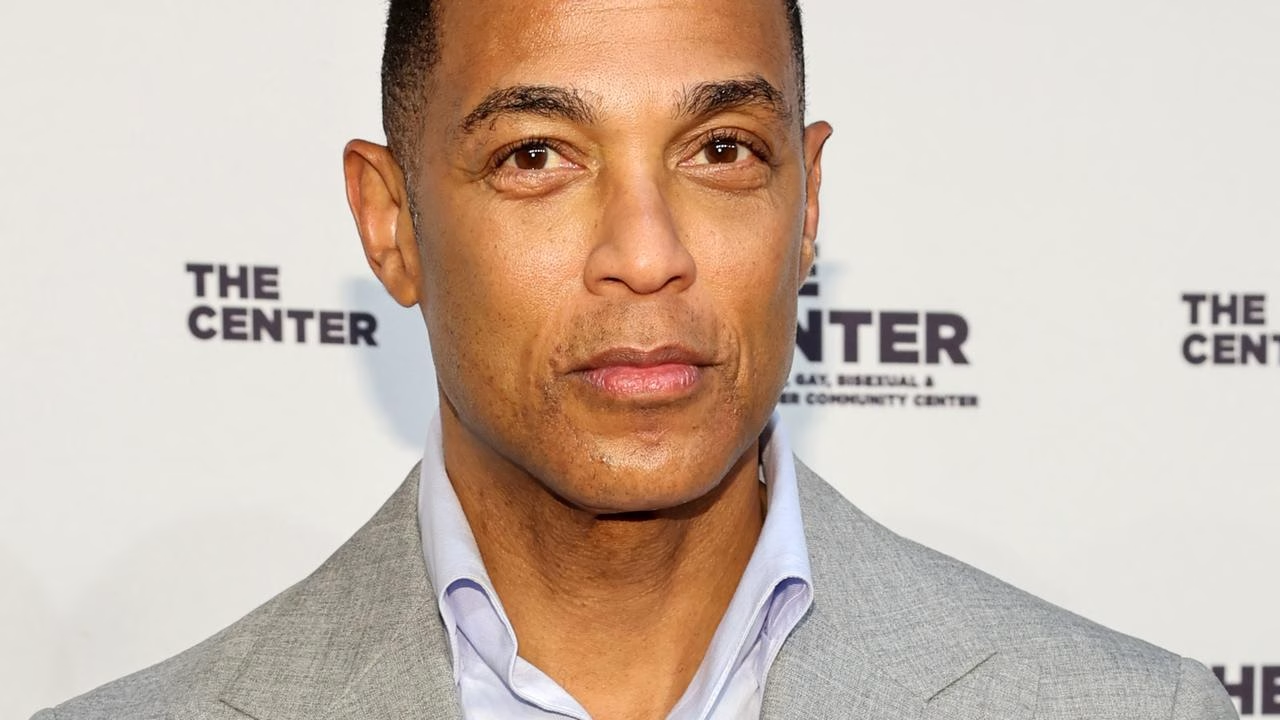
Former CNN anchor Don Lemon was taken into federal custody late last night following an investigation tied to a protest that disrupted a church service earlier this month in St. Paul, Minnesota. The arrest has quickly ignited debate over the boundaries between journalism, protest coverage, and federal law enforcement—particularly when religious spaces and political demonstrations collide.
According to accounts shared during live news coverage, Lemon was in Minnesota reporting on protests that followed the fatal shootings of Renee Good and Alex Pretti. One demonstration spilled into a church service, where protesters interrupted worship to call attention to immigration enforcement policies. Lemon maintains that he was present strictly in his capacity as a journalist, documenting events as they unfolded rather than participating in the protest itself.
That distinction is now central to the controversy. Lemon was arrested in Los Angeles and is expected to appear in federal court, though at the time of reporting, the specific charges had not yet been unsealed. His attorney, Abby Lowell, has sharply criticized the prosecution, calling it an unprecedented attack on the First Amendment and warning of the chilling effect such actions could have on journalists covering protests.
A magistrate judge had previously rejected a case connected to the St. Paul incident. Prosecutors later sought and obtained Lemon’s arrest, a move that has raised eyebrows among legal analysts and press freedom advocates alike. The uncertainty surrounding the charges has only added to the tension, with Lemon’s legal team reportedly learning key details in real time as events unfold.
Legal experts following the case say the government may be relying on the federal Freedom of Access to Clinic Entrances Act, commonly known as the FACE Act. While the law is most often associated with protecting access to reproductive health clinics, it also prohibits interference—by force or threat—with the right to religious worship. In recent years, federal authorities have signaled an increased willingness to apply the law to cases involving disruptions of religious services.
What complicates the matter is Lemon’s role during the protest. Affidavits referenced during coverage reportedly describe him interviewing protesters and parishioners, livestreaming events, and speaking with organizers as the demonstration unfolded. Lemon himself is quoted in those documents as repeatedly stating that he was there to “chronicle and report” what was happening. Whether that conduct crosses the line from observation into participation is the legal question now at the heart of the case.
The implications extend beyond Lemon himself. Journalists routinely follow protests into uncomfortable, chaotic, and sometimes legally gray spaces to document events for the public. If reporting from within a protest—particularly one that enters private or religious property—can trigger criminal liability, press advocates argue it could discourage reporters from covering controversial but newsworthy events.
The case also unfolds against a politically charged backdrop. Lemon has long been a vocal critic of Donald Trump and a frequent target of ridicule within MAGA-aligned circles. While there is no public evidence that politics played a role in the arrest, the optics have fueled suspicion among supporters who view the move as selective enforcement or retaliation.

Mein Kampf & Trump — Available on Amazon
Adding to those concerns is the broader climate surrounding press freedom. The arrest comes just weeks after federal agents searched a Washington Post reporter’s home in a separate investigation, an action that reignited fears about government overreach into journalistic work—even when reporters themselves are not the targets.
For now, much remains unclear. Federal charges have yet to be formally unsealed, and it is not known how prosecutors will argue Lemon’s alleged liability for actions taken by protesters he was covering. What is clear is that the case is likely to become a flashpoint in the ongoing debate over how far the government can go when journalists document acts of civil disobedience.
As Lemon awaits his court appearance, press freedom organizations and legal observers will be watching closely—not just for his sake, but for what the outcome could mean for journalists navigating the increasingly fraught terrain of protest reporting in the United States.
Ya