

By Tony Bruce | Thursday, December 25, 2025 | 4 min read
At the start of the year, the story many powerful institutions wanted to tell was simple: Donald Trump was back. The headlines spoke of momentum, inevitability, even a political resurrection. The New York Times described a “seismic shift” rattling Washington. Rupert Murdoch’s New York Post hailed a “golden age” and an empowered return. The message was clear—Trump had survived everything and emerged stronger.
But the year that followed told a very different story.
What unfolded instead was not a triumphant comeback but a slow erosion—marked by overreach, self-inflicted wounds, and a growing sense that Trump’s governing style no longer matched the public mood. His supporters had been promised strength, discipline, and results. What they witnessed was chaos, legal brinkmanship, and a familiar reliance on spectacle over substance.
Polls captured the shift more clearly than any headline ever could. Approval ratings sank to historic lows. As The Economist observed, presidents often lose popularity once the honeymoon ends—but no recent president has fallen this fast, this early. By the fall, discontent had spilled out of polling data and onto the streets.
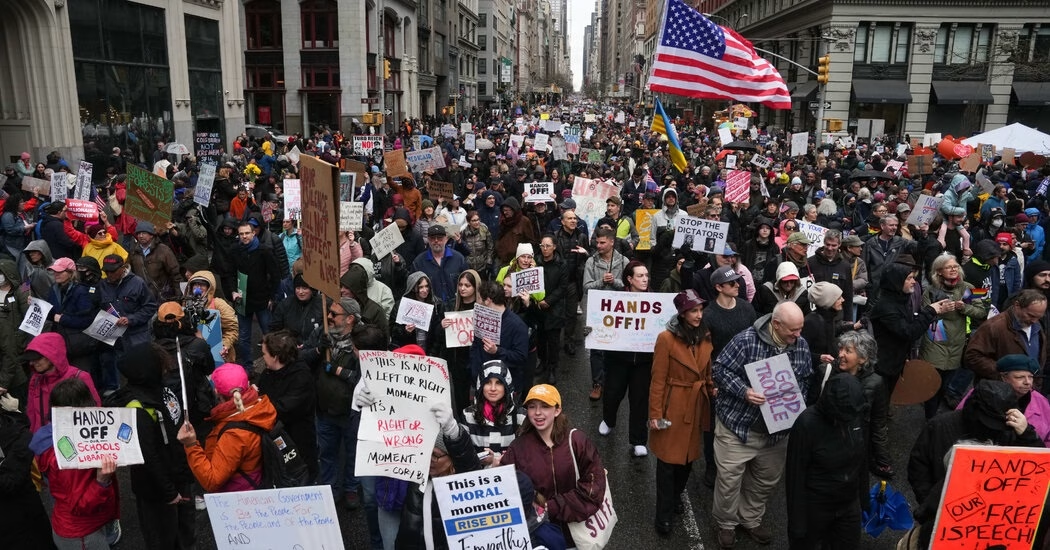
The “No Kings” protests were not isolated outbursts. They were mass mobilizations—millions of Americans participating across multiple days, forming one of the largest protest movements since 1970. These demonstrations weren’t about partisan squabbles; they reflected a deeper unease with the concentration of power, the erosion of democratic norms, and a governing philosophy that increasingly felt untethered from accountability.
Economic anxiety only sharpened that unrest. Inflation remained stubborn. Affordability became a daily stressor rather than an abstract policy debate. Then came the market turmoil—five trillion dollars wiped out in weeks. For ordinary Americans, “Liberation Day” became a bitter joke, a reminder that political slogans don’t pay rent or lower grocery bills.
Overlaying it all was the Epstein scandal, resurfacing with renewed force. The issue wasn’t just the allegations themselves, but the sense that once again, powerful people were insulated from consequences. January 6 rioters were pardoned. Institutions hesitated. Redactions multiplied. Trust eroded further.
What made this year particularly revealing wasn’t just Trump’s behavior—it was the response of elites. Media companies settled questionable lawsuits. Corporate leaders fell silent. Universities, law firms, and tech executives appeared more concerned with access than principle. At Trump’s inauguration, billionaires stood behind him, signaling alignment. Months later, many of those same figures dismissed concerns about affordability and democratic erosion as distractions.
And yet, something else happened alongside that elite retreat: ordinary Americans pushed back.
Voters delivered sharp rebukes in state and local elections. Republicans lost dozens of seats. Not a single local race swung toward Trump-aligned candidates. Protesters filled streets. Videos circulated online, bypassing traditional gatekeepers. The old assumption—that public frustration could be managed through messaging alone—no longer held.
This disconnect between elite confidence and public reality defined the year. Trump claimed a sweeping mandate, but it never materialized. The “dog that didn’t bark” became impossible to ignore. By year’s end, even allies began treating him less like a returning conqueror and more like a lame duck—someone whose power was already waning, whose time was slipping away.
The irony is that Trump did achieve something rare: a political comeback after defeat. But it may also be one of the shortest-lived comebacks in modern history. Unlike previous second acts, this one collided quickly with public fatigue. The appetite for constant conflict, manufactured outrage, and institutional intimidation appears to be diminishing.
The lesson of the year isn’t that Americans suddenly became unified or that political divisions vanished. It’s that chaos and cruelty don’t govern well. Spectacle wears thin. And when elites stop listening, people eventually stop waiting.
The story that began with declarations of dominance ends with something quieter but more consequential: a country reasserting that no leader is bigger than the pressures of reality, accountability, and time.
Yahoo an