

By Ben Emos | Sunday March 08 2026 | 3 min read
Something unusual may be happening quietly behind closed doors in the Middle East.
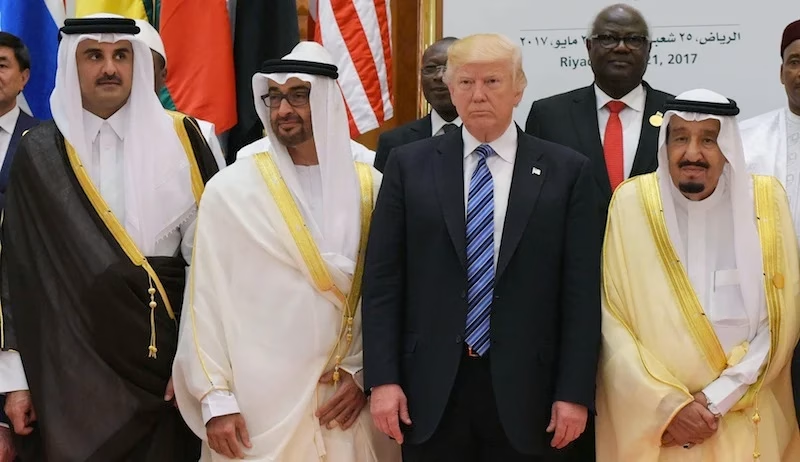
Reports that Saudi Arabia, the United Arab Emirates and Qatar are reviewing financial commitments and contracts tied to the United States may sound like routine economic housekeeping. But in reality, the discussion hints at something deeper: a region reassessing the reliability of global power.
For decades, Gulf states built their security and economic strategies around one central pillar—the United States. American military protection, investment flows, and diplomatic influence helped shape the modern Gulf order.
But the world of 2026 looks very different from the one that existed even ten years ago.
Regional wars are escalating faster. Global power is becoming more fragmented. And perhaps most unsettling for smaller nations, the decisions of a handful of political leaders can rapidly reshape the security environment for everyone else.
From the Gulf perspective, the question is no longer simply who their allies are. The real question is whether those alliances come with risks that are increasingly difficult to control.
If a major confrontation erupts between global powers and Iran, the Gulf sits directly in the line of fire. Oil facilities, shipping routes and financial hubs could become targets or casualties in a conflict they did not start.
For countries whose economies depend on stability, that is an unacceptable vulnerability.
This may explain why Gulf leaders have quietly begun diversifying their relationships. Alongside their traditional partnership with Washington, they are strengthening ties with Asia, expanding diplomatic outreach, and spreading investments across multiple continents.
Another factor shaping the discussion is the unpredictability of global political leadership. Analysts often point out that abrupt policy shifts or aggressive military strategies by powerful leaders can rapidly alter the strategic environment.
Figures such as Donald Trump and Benjamin Netanyahu have both been associated with highly assertive foreign policy approaches. For smaller states in sensitive regions, this raises an uncomfortable question: how much influence do they truly have over decisions that could affect their security?
If a conflict escalates beyond expectations, Gulf countries could find themselves exposed to retaliation or economic disruption despite not being direct participants.
It is not about abandoning the United States.
It is about insurance.
In a world where political leadership can change dramatically from one election to the next, strategic flexibility has become the most valuable asset any nation can possess.
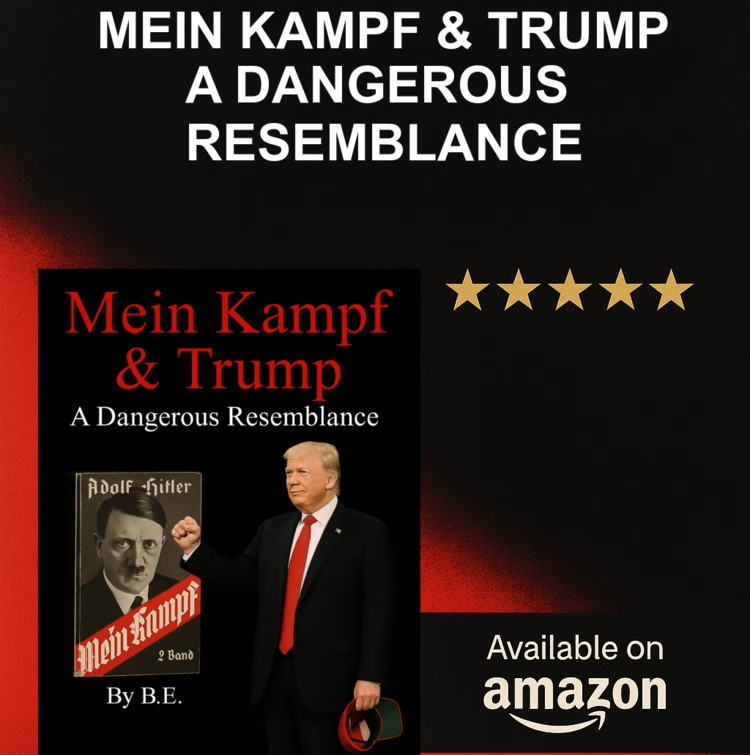
Mein Kampf & Trump — Available on Amazon
The Gulf states understand something many others are only beginning to realize: in an era of unpredictable geopolitics, relying too heavily on a single power may be the greatest risk of all.
If recent developments are any indication, countries across the Middle East appear increasingly determined to shape their own path rather than rely solely on traditional alliances. Leaders in the region seem to be thinking more independently about security, economic partnerships, and long-term stability. In a world where geopolitical tensions can shift quickly, many Gulf states are positioning themselves to have greater control over their future—strengthening old relationships where it makes sense, but also building new ones that give them more flexibility and influence on the global stage. #saudiarabia #uae #qatar #usa