

By Ben Emos | Friday March 13 2026 | 4 min read
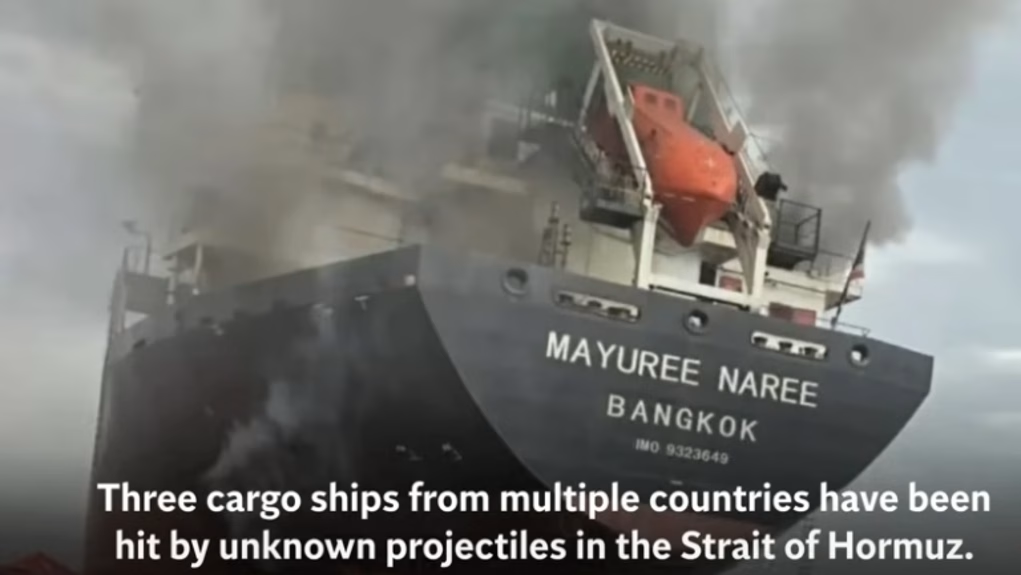
The narrow waters of the Strait of Hormuz have once again become one of the most dangerous maritime corridors in the world. In recent days, a series of attacks on oil tankers and energy infrastructure has transformed the vital shipping route into a geopolitical battleground. Several vessels have reportedly been struck near the strait and even in nearby Iraqi waters, escalating fears of a wider disruption to global energy supplies.
The Strait of Hormuz is not just another regional waterway. Roughly one-fifth of the world’s oil passes through this narrow channel between the Persian Gulf and the Gulf of Oman, making it one of the most strategically important energy routes on the planet. When instability erupts here, the consequences ripple through global markets almost immediately.
Recent reports describe a sharp escalation in maritime incidents. Tankers have been damaged by drones, explosive boats, and missile strikes, forcing shipping companies to reconsider routes and raising insurance costs for vessels entering the region. Some governments have even begun discussing naval escorts for commercial shipping to protect tankers from further attacks.
For energy markets, the implications are enormous. Analysts warn that the conflict is already causing one of the most severe supply disruptions in decades. Oil prices have surged above $100 a barrel as traders react to the possibility that shipments through the strait could slow dramatically or halt altogether.
Yet beyond the immediate shock to energy markets lies a deeper question: how predictable was this escalation?
For many analysts and military planners, the risk of conflict in the Strait of Hormuz has been widely discussed for years. The geography alone makes it a natural pressure point. At its narrowest point, the strait is only about 21 miles wide, leaving commercial vessels with limited room to maneuver. A single disabled tanker or targeted attack can create massive disruption.
Iran has long viewed the strait as a strategic lever in any confrontation with Western powers or regional rivals. Iranian naval doctrine emphasizes asymmetric warfare—using drones, mines, small boats, and missiles to threaten larger naval forces and commercial shipping. In other words, the tactics now appearing in the current conflict were not improvised overnight.
Military analysts have repeatedly warned that any regional war involving Iran would almost certainly spill into maritime conflict in the Gulf. Attacking energy infrastructure and shipping lanes is one of the few ways a regional power can impose immediate global economic pressure.
That is why some critics argue the current escalation should not have come as a surprise. If the broader conflict had been planned more deliberately and with a longer strategic horizon, the vulnerability of the Strait of Hormuz would likely have been one of the first risks identified.
Protecting shipping through the strait has always required careful coordination between naval forces, regional allies, and energy companies. Without such preparation, the waterway becomes an easy target for disruption.
The consequences are now becoming clear. Shipping traffic has slowed dramatically, tankers are rerouting where possible, and global markets are reacting to the uncertainty. Even a limited number of attacks can send shockwaves through the energy system because the strait functions as a single chokepoint for a huge portion of global oil exports.

Mein Kampf & Trump — Available on Amazon
At the same time, the escalation highlights a broader truth about modern conflicts: control of critical infrastructure can be as powerful as battlefield victories. Oil terminals, pipelines, and shipping lanes have become strategic targets precisely because they influence economies far beyond the region.
For now, the Strait of Hormuz remains open, but increasingly dangerous. Each new incident raises the stakes, not only for the countries directly involved but also for the global economy that depends on the uninterrupted flow of energy through these narrow waters.
What began as a regional conflict is rapidly evolving into a crisis that could reshape global energy markets. And as tensions continue to rise, the world is being reminded that some of the most decisive battles of modern warfare are fought not only on land, but along the arteries of global trade.
Y