

By Andrew James | Saturday March 14 2026 | 4 min read
A devastating missile strike that destroyed a school in southern Iran is now under intense scrutiny after early findings from a Pentagon investigation suggested the attack may have been based on outdated intelligence. The tragedy has sparked global outrage, particularly because many of the victims were children attending classes when the strike occurred.
According to officials familiar with the preliminary inquiry, U.S. forces may have targeted the building after intelligence data incorrectly identified it as part of a nearby military complex. The information reportedly came from older Defense Intelligence Agency records that had not been updated, even though the facility had long since been converted into a school.
The strike hit the Shajarah Tayyebeh school in the city of Minab during the opening phase of the broader military campaign in the region. Satellite imagery and independent analysis suggest the missile was a U.S.-launched Tomahawk cruise missile that struck the area with precision.
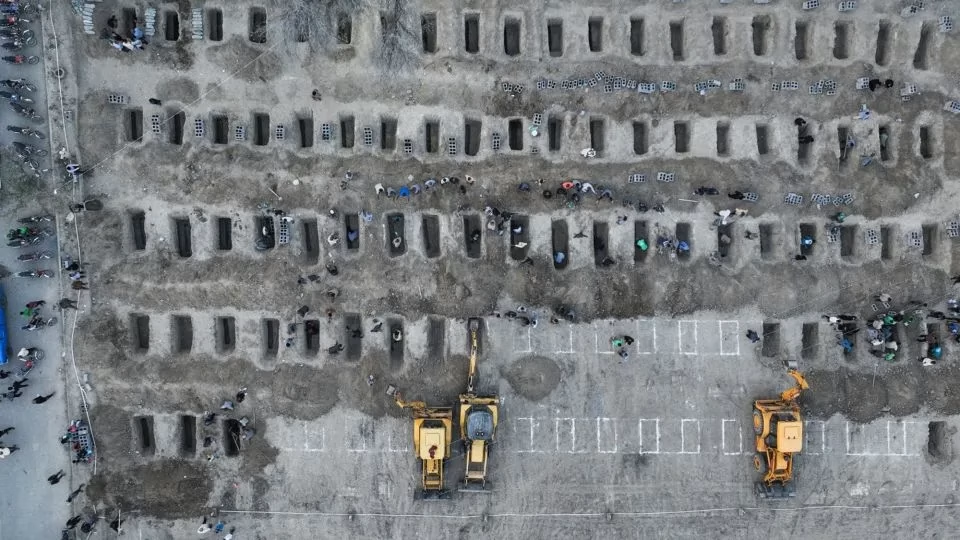
The human cost has been staggering. Reports indicate that more than 150 students were killed, along with teachers and staff, making it one of the deadliest incidents involving civilians in the conflict so far.
Investigators say the root of the tragedy appears to be a failure in the targeting process. Military planners reportedly relied on outdated intelligence that still classified the structure as part of an Iranian Revolutionary Guard naval complex located nearby. In reality, the building had been separated from the military compound years earlier and was operating as a school.
Experts note that the school’s features—playgrounds, classrooms, and public online listings—should have signaled its civilian purpose. The fact that these indicators were overlooked has raised serious questions about how targeting decisions were made.
In modern warfare, identifying legitimate targets often involves layers of verification, including satellite imagery, intelligence analysis, and cross-checking with updated databases. When those safeguards fail, the consequences can be catastrophic.
Was Trump Lying as Reports Suggest the U.S. Bombed an Iranian School?
Early statements from Donald Trump placed the blame for the explosion on Iran. However, preliminary findings from a United States Department of Defense investigation suggest the strike may have been carried out by U.S. forces using outdated targeting intelligence. The contrast between those early claims and the emerging evidence has fueled criticism from analysts and political opponents, some of whom argue the former president has a long record of making inaccurate or misleading statements in public.
Whether the initial accusation reflected incomplete information or a deliberate attempt to shift blame remains a matter of debate. What is becoming clearer, though, is that the narrative surrounding the strike has changed significantly as more details emerge.
Iran school bombing: Trump accused of lying as report finds US responsible
As more evidence emerged—including missile fragments and geolocated footage—attention shifted toward the possibility that U.S. forces were responsible. The Pentagon has since acknowledged that an investigation is underway and emphasized that American forces do not intentionally target civilian facilities.
Beyond the technical details of targeting systems and intelligence failures lies a far more painful reality: the victims were children.
Families in Minab were preparing for an ordinary school day when the strike occurred. Within seconds, the building was reduced to rubble. Rescue workers and residents spent hours pulling survivors and bodies from the debris.
For many observers, the incident underscores the brutal consequences of war when errors occur. Military planners often speak in terms of coordinates, targets, and strategic objectives. But on the ground, those coordinates correspond to real places filled with civilians.
International organizations and human rights groups have called for a transparent investigation into the incident. Under international humanitarian law, schools and other civilian facilities are protected sites. Strikes against them—even if accidental—can raise serious legal and ethical questions.

Mein Kampf & Trump — Available on Amazon
The United Nations has also urged a full inquiry, emphasizing the need to determine exactly how the targeting error occurred and whether safeguards failed.
For now, the Pentagon’s investigation remains ongoing. Officials say they are reviewing intelligence sources, targeting procedures, and the chain of decisions that led to the strike.
What is already clear, however, is that the consequences of this mistake extend far beyond the battlefield. The destruction of a school and the loss of so many young lives have become a stark reminder of the human stakes in modern warfare—and the heavy responsibility that comes with every military decision.
What Did the Pentagon Investigation Reveal About the Iranian School Strike?
Preliminary findings suggest U.S. forces may have relied on outdated intelligence that incorrectly identified the building as part of a nearby military facility. Investigators are now examining how that information remained in targeting databases and why it was not updated before the strike.
Where Did the Iranian School Strike Occur?
The strike reportedly took place in the city of Minab in southern Iran. At the time of the attack, the building was functioning as a school where students had gathered for classes, turning what should have been an ordinary day into a devastating tragedy.
Why Is the Iranian School Bombing Controversial?
The incident has drawn widespread criticism because the building was reportedly a civilian school and many of the victims were students. Images and accounts from the aftermath have fueled anger and grief, raising difficult questions about how such a target could have been misidentified.
Is the Pentagon Still Investigating the Strike?
Yes. Officials say the investigation is ongoing and includes a review of intelligence sources, targeting procedures, and the chain of decisions that led to the strike.
For the families who lost children and loved ones, however, the answers cannot come soon enough. Beyond strategy and military reports lies a painful reality—lives were cut short, and a community has been left to reckon with a loss that no investigation can undo.