

By Ben Emos | Monday February 23, 2026 | 6 min read
There was a time when Twitter felt like the internet’s living room. It was loud, messy, occasionally obnoxious — but also alive. Breaking news would unfold in real time alongside running jokes, niche communities, and the kind of small, human moments that made the scrolling worthwhile. One minute you were reading firsthand accounts from journalists on the ground somewhere; the next, you were deep in a thread about someone’s disastrous first attempt at sourdough. It was chaotic, but it had a pulse.
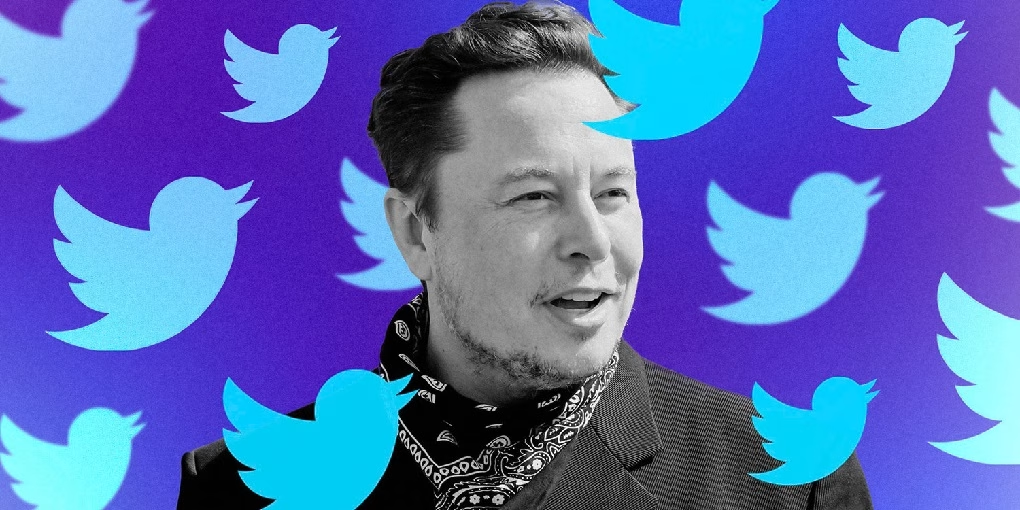
That version of Twitter began to fade in October 2022, when Elon Musk arrived at the company’s headquarters carrying a porcelain sink and posted the caption, “Let that sink in.” It was a stunt, a meme in physical form, and a signal that the platform was entering a new chapter. Within months, Twitter had been renamed X, most of its workforce had been laid off, and Musk described the shift as a necessary “cultural reset.”
He framed the takeover as a mission to defend free speech and push back against what he and many conservatives viewed as ideological bias. At times, he spoke about the platform in sweeping terms, suggesting it had been distorting public discourse at a civilizational level. In his telling, drastic change wasn’t optional — it was urgent.
Intentions aside, the results have been dramatic.
One of the earliest and most visible changes involved verification. For years, the blue check mark served a straightforward purpose: it confirmed that a public figure, journalist, or organization was actually who they claimed to be. After the takeover, that system was scrapped. Anyone willing to pay a monthly fee could obtain the same badge.
The fallout was immediate. Fake accounts impersonated athletes announcing trades, corporations issuing fake apologies, and public officials making fabricated statements. Some posts were obviously jokes; others weren’t. In a few cases, misinformation briefly moved markets before corrections caught up. Even after new badges were introduced to distinguish certain official accounts, the damage lingered. The blue check no longer meant verified identity. It meant someone had entered a credit card number.
At the same time, Twitter’s trust and safety teams were dramatically reduced. Content moderation staff shrank. Previously banned accounts were reinstated, including several that had been removed for violating rules around harassment or incitement. Independent researchers began reporting noticeable increases in hate speech in the months following the transition.
The consequences became especially clear during fast-moving global events. After the October 7 attacks in Israel, the platform filled with dramatic videos and emotional claims — some accurate, many not. Old footage from other conflicts resurfaced and was presented as current. Clips from video games were labeled as real military action. Because many of the accounts sharing this material carried paid verification badges, casual readers had little reason to doubt them at first glance.
Then came monetization.
Under the new model, premium users could earn revenue based on engagement from other paying users. Replies, reposts, and interactions translated into income. In theory, this rewarded compelling content. In practice, it often rewarded outrage. The more provocative a post, the more likely it was to spark arguments — and arguments drive engagement.
A handful of accounts reported earning thousands of dollars per month. While most users see far less, even modest payouts can be meaningful in countries with lower costs of living. At one point, when account location data became briefly more transparent, observers noticed that some loudly patriotic “American” accounts were actually operating from overseas. That alone didn’t make their opinions invalid, but it complicated the narrative many followers assumed.
Much of this shift didn’t require hidden algorithmic manipulation. It stemmed from changing incentives. Still, questions about the algorithm have persisted. Independent tests by journalists suggested that right-leaning political content appeared prominently across a range of accounts, even among users who did not actively engage with politics. The company has described updates in technical language, but outside observers are left to interpret patterns rather than review clear documentation.
Musk himself has shown he is not a passive owner. In one widely discussed incident during the 2023 Super Bowl, he reportedly became frustrated that a tweet he posted received less engagement than a similar message from President Biden. Engineers were called in late at night to investigate. Subsequent reporting indicated changes were made that significantly boosted the visibility of Musk’s posts.
Experiments later conducted by media outlets found that Musk’s content appeared in most new accounts’ feeds — even when users selected options indicating they were not interested in seeing his posts. Whether by design or unintended consequence, the owner’s voice became difficult to avoid.
All of this might be dismissed as internal platform drama if it didn’t spill into the broader world.
One surreal example involved speculation about Fort Knox. A social media post questioned whether U.S. gold reserves were properly audited. Musk publicly engaged with the idea. Within days, he suggested livestreaming a walkthrough. Soon after, the President publicly mentioned visiting to confirm the gold was still there.
On its face, it was almost funny — an online rumor evolving into official conversation. But it revealed something important: when leaders and influencers inhabit the same rapid-fire digital ecosystem as everyone else, the boundary between viral speculation and real-world action grows thinner.
More troubling consequences have appeared abroad. In 2024, following a tragic stabbing attack in Southport, England, false claims about the suspect’s identity spread quickly on Twitter. Before authorities released verified information, posts suggesting the attacker was a Muslim immigrant gained traction. By the time the truth emerged, unrest had already ignited. Mosques and asylum housing were targeted. Analysts later reported that misinformation related to the incident generated enormous online reach in a matter of days.

Mein Kampf & Trump — Available on Amazon
No single platform can be blamed for complex social tensions. But social media can amplify them — accelerating anger, reinforcing falsehoods, and shrinking the time between rumor and reaction.
Today, the platform once known for its messy charm feels different. It is still powerful, still influential, still capable of shaping headlines and policy conversations. But it operates with fewer guardrails, altered incentives, and a closer alignment between ownership and amplification.
For some, it remains essential — a place to track conversations and engage in debate. For others, it has become draining or corrosive. What’s undeniable is that the version of Twitter many people remember — flawed but vibrant — has been transformed.
And whether we participate or simply observe from a distance, that transformation doesn’t stay confined to a screen.