

By Mary Jones & Ben Emos | Sunday, December 21, 2025 | 7 min read
Long before the Epstein files began emerging in carefully managed bursts, many Americans had already watched this script play out. During the Stormy Daniels scandal, Donald Trump denied knowing her, dismissed the allegations, and sidestepped questions about the hush money payment made to keep the story quiet. At the same time, his Justice Department—then overseen by Attorney General William Barr—showed little urgency in exposing the full truth. Records stalled, investigations lost steam, and public scrutiny slowly faded. Once again, power appeared to close ranks around itself.
That same pattern now appears to be repeating with the release of the Jeffrey Epstein files. Rather than a full, transparent accounting, the public has been handed a slow drip of documents—pages heavily redacted, materials released in batches, and even files quietly removed after appearing online. Survivors and lawmakers have described the process as “mafia-style,” not for dramatic effect, but because of the unmistakable message it sends: this is disclosure on the government’s terms, not the public’s.
The documents released so far do not radically alter what is already known about Epstein’s crimes. What they do confirm, however, is something arguably more damning—that law enforcement had credible warnings decades earlier and failed to act. The result is not just a story about one serial abuser, but about institutional silence, selective transparency, and a justice system that repeatedly faltered when confronted with wealth and influence.
Here are four of the most significant revelations from the Justice Department’s latest Epstein files release.
1. The FBI Was Warned in 1996—and Ignored It
Nearly a decade before Jeffrey Epstein was first arrested, a professional artist filed a criminal complaint with the FBI in September 1996 accusing him of involvement in child pornography. That complaint, described in newly released documents, confirms long-standing claims made by Epstein survivor Maria Farmer.
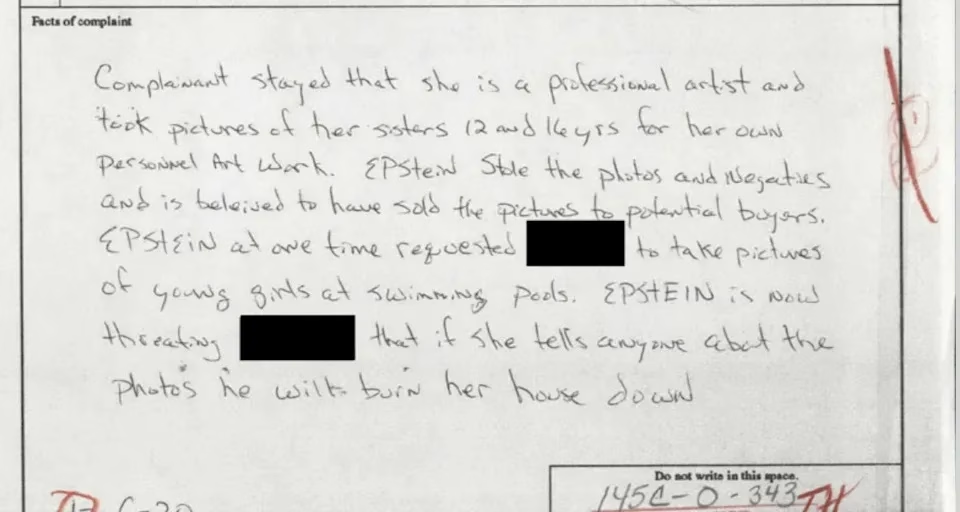
According to a handwritten FBI summary dated September 3, 1996, the artist reported that Epstein had stolen photographs she took of her 12- and 16-year-old sisters for her artwork. She believed Epstein sold those images to “potential buyers.” The report further alleges that Epstein asked her to photograph young girls at public swimming pools and threatened to burn her house down if she spoke about the photos. The case designation at the top of the page is blunt: “child pornography.”
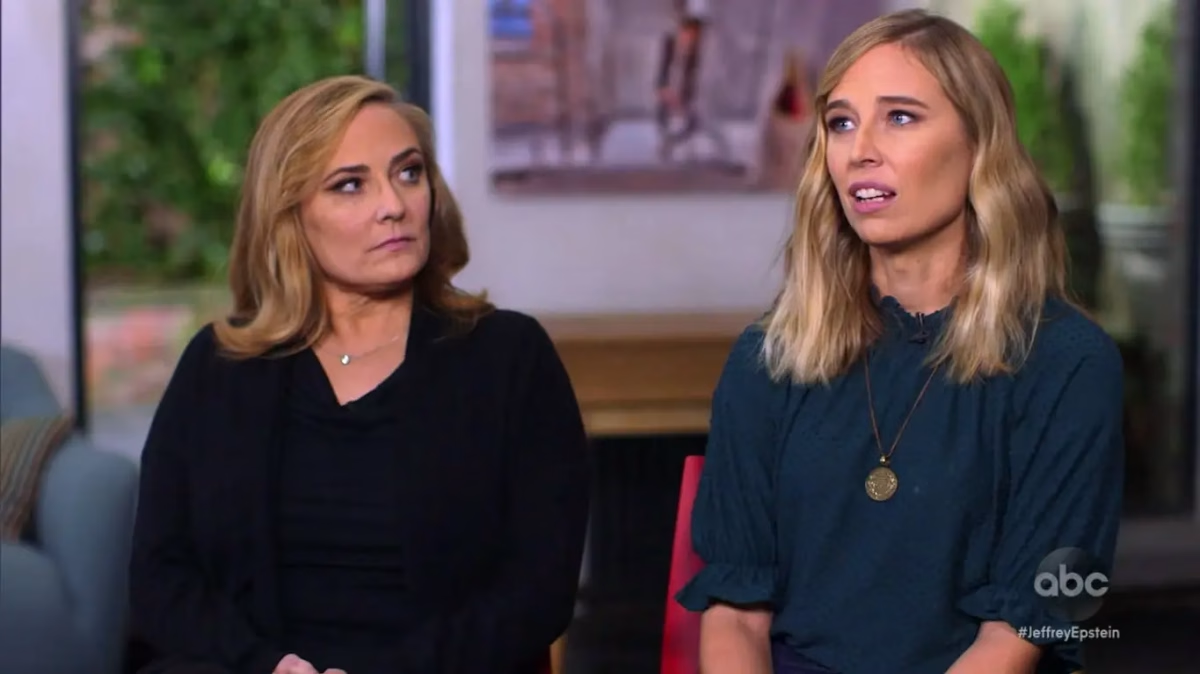
Farmer has consistently said that in the summer of 1996, Epstein and his longtime associate Ghislaine Maxwell sexually assaulted her. She later discovered that nude and partially nude images of her younger sisters had been taken during their visit. She contacted the New York Police Department and then the FBI, warning that Epstein and Maxwell were running a child trafficking operation and producing child sexual abuse material.
Despite the seriousness of her claims—including allegations that Epstein transported illicit images across state lines and kept a “modeling book” containing child pornography in a safe at his New York mansion—Farmer says the FBI agent she spoke to hung up on her mid-sentence. No follow-up ever came.
2. A Survivor Finally Vindicated—After Nearly 30 Years
For decades, Farmer’s account was dismissed or ignored. The newly released document marks the first official confirmation that federal authorities did, in fact, receive her complaint in 1996.
Now in her fifties, Farmer described the moment as both vindicating and heartbreaking. “This is one of the best days of my life,” she said, adding that she wept not only for herself but for the many victims she believes could have been spared had authorities acted sooner.
“They can’t call me a liar anymore,” she said. Still, her relief is tempered by anger and grief. She says she lived in fear for years after reporting Epstein, hearing nothing from the FBI until more than a decade later, when the broader investigation that led to Epstein’s 2008 Florida plea deal began.
A 2020 internal Justice Department review of the Epstein case made no mention of Farmer’s 1996 complaint—an omission that now raises serious questions about how thoroughly the government examined its own failures.
3. Powerful Names Appear—But Context Is Missing
Among the thousands of pages released are photographs of Epstein with numerous prominent figures, including former President Bill Clinton, Michael Jackson, Mick Jagger, Diana Ross, Kevin Spacey, Chris Tucker, and journalist Walter Cronkite. International figures such as former Prince Andrew and British diplomat Peter Mandelson also appear.
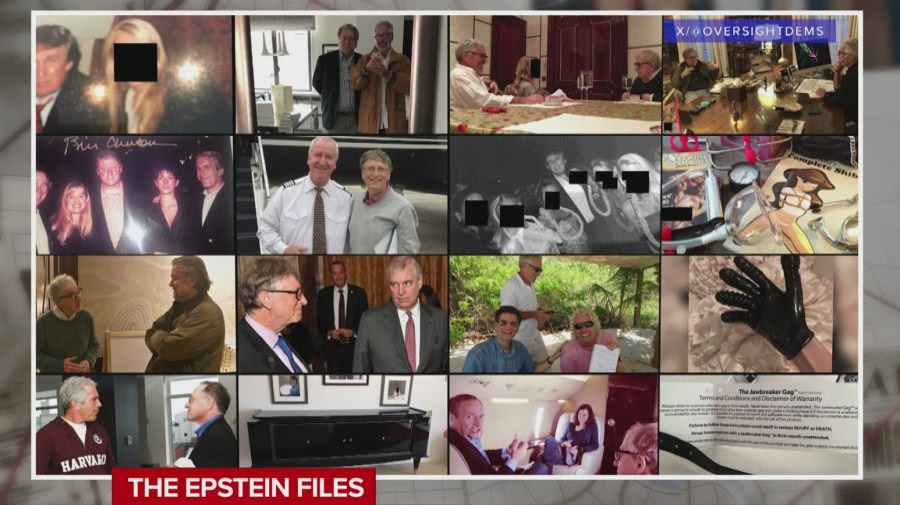
The images do not depict illegal activity, and none of the individuals shown—aside from Prince Andrew, who has faced civil allegations—have been charged with crimes related to Epstein. Still, the photos reinforce how deeply Epstein embedded himself within elite political, cultural, and social circles.
Prince Andrew lost his royal titles following renewed scrutiny sparked by Epstein survivor Virginia Giuffre’s memoir, in which she alleges the former royal sexually abused her as a teenager—claims he denies. Mandelson, meanwhile, was removed as the U.K.’s ambassador to the U.S. after emails revealed he maintained contact with Epstein even after his 2008 conviction.
The DOJ’s release appeared to emphasize Clinton in particular, sharing images of him with Epstein associates. Clinton has said he regrets his relationship with Epstein and maintains he was unaware of any criminal behavior.
4. Epstein Files Redactions, Removals, and Lingering Questions
Perhaps the most striking feature of the release is how much remains hidden. More than 550 pages are fully redacted. Entire documents—some exceeding 100 pages—are completely blacked out, including a file labeled “Grand Jury–NY.” Other files contain cover pages or images followed by long stretches of obscured text.
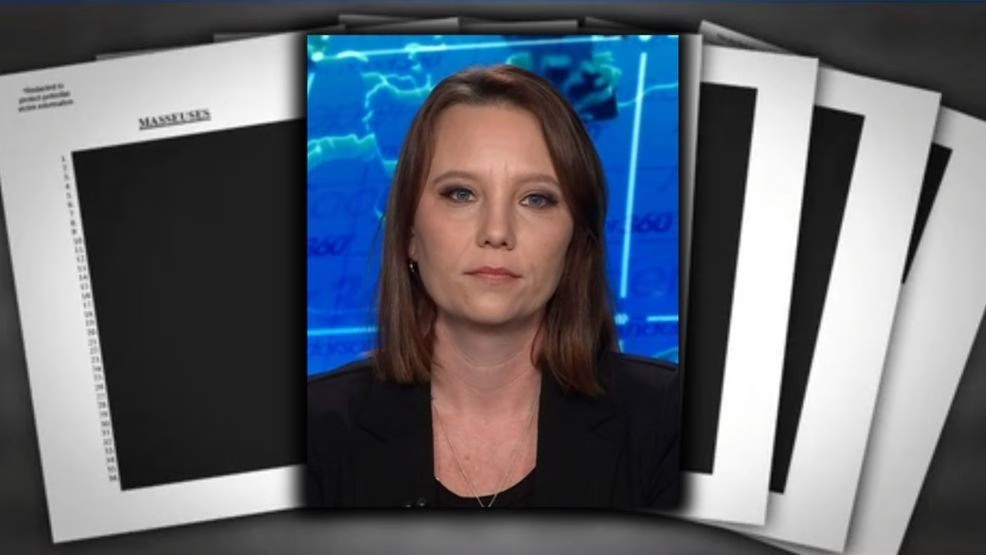
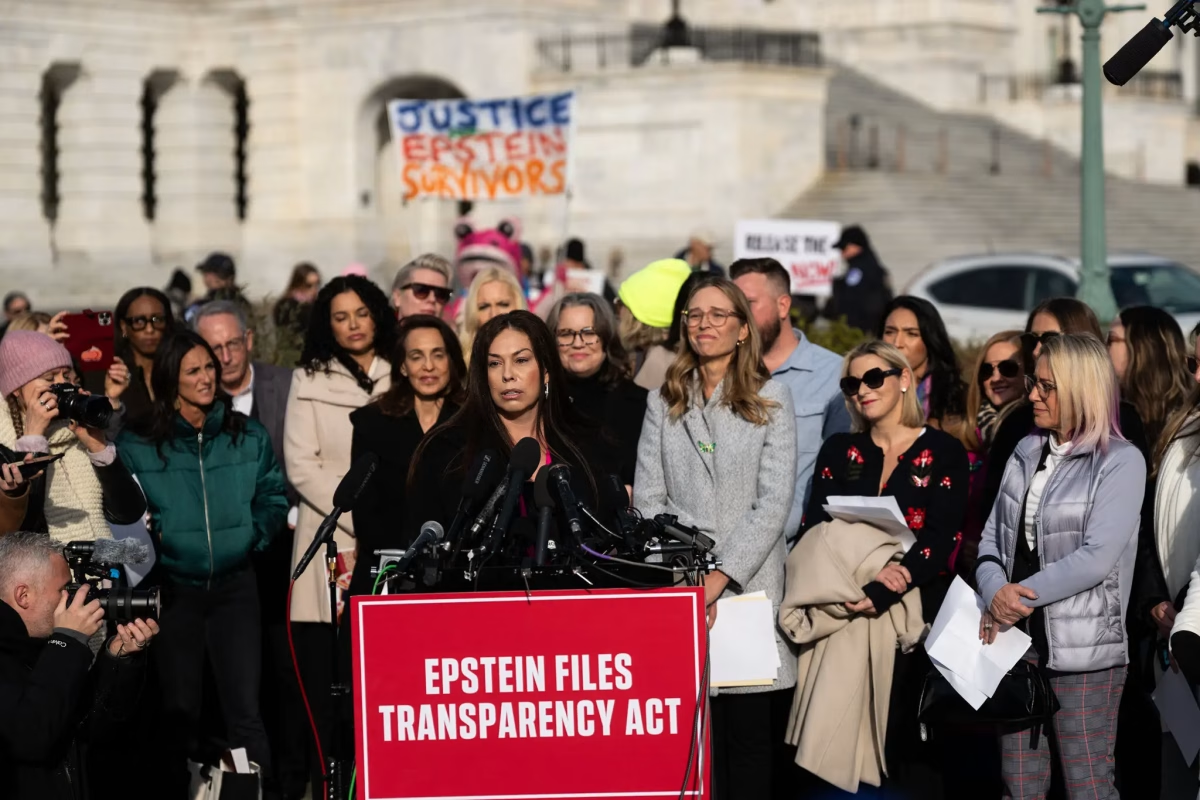
Lawmakers who pushed for the release say the Justice Department has failed to comply with transparency requirements. Representative Ro Khanna, co-author of the Epstein Files Transparency Act, said the law requires explanations for redactions—none of which have been provided.

Adding to the controversy, at least 16 files appear to have disappeared from the DOJ’s website after initially being posted, including a photo that reportedly showed Donald Trump. The administration has offered no explanation for their removal.
Trump’s relative absence in the newly released documents stands in contrast to earlier Epstein-related records, where his name and image appeared more frequently. While Trump has denied wrongdoing and says he had no knowledge of Epstein’s crimes, critics argue the uneven disclosures only deepen public mistrust.
As Senate Minority Leader Chuck Schumer put it, “If they’re taking this down, just imagine how much more they’re trying to hide.”
What the Epstein files reveal so far is not justice—it’s confirmation of failure. Survivors warned authorities. Evidence existed. And yet, year after year, the truth was delayed, diluted, or buried. Whether this moment leads to real accountability or simply another controlled disclosure remains an open—and urgent—question.
Yahoo