
By Don Terry | Monday, December 08, 2025 | 5 min read
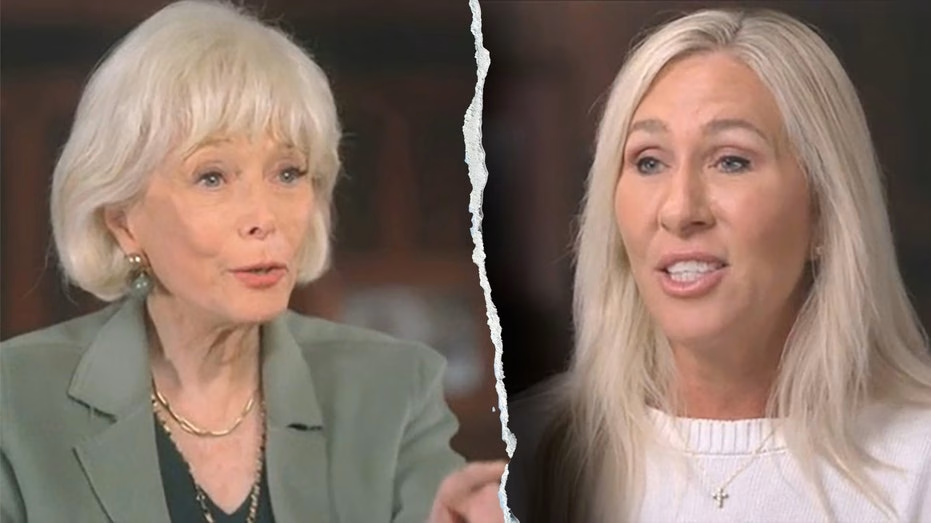
Marjorie Taylor Greene’s latest public break with Donald Trump feels like the culmination of a long-brewing collision — one that has been unfolding quietly behind closed doors but has now spilled into the open with a force that even seasoned observers didn’t expect. For years, Greene was viewed as one of Trump’s most loyal allies, someone who stayed close even when many Republicans tried to create distance. That’s why her recent decision to speak out, coupled with her announcement that she plans to leave Congress, has created such an eruption inside the conservative world she once defended so fiercely.
Greene describes her decision as something that didn’t happen overnight but developed as she began receiving threats she says came from people aligned with Trump. According to her, the rift deepened when Trump publicly mocked her with a nickname she says immediately triggered a flood of dangerous messages directed at her and her family. She claims she reached out to him directly to ask him to stop, telling him that his words were putting her child’s safety at risk. What she says she got in return wasn’t sympathy but anger — and she refuses to repeat the specifics, saying only that his response was “extremely unkind.”
In her telling, that moment became a turning point. It was the first time, she says, when she realized how fragile her standing was in a movement she believed she had helped build. And it wasn’t just Trump she felt brushed her aside. Greene says she also showed evidence of threats to other Republican officials and was met either with silence or polite indifference. The shock of feeling politically abandoned by the very people she had defended most fiercely left a mark.
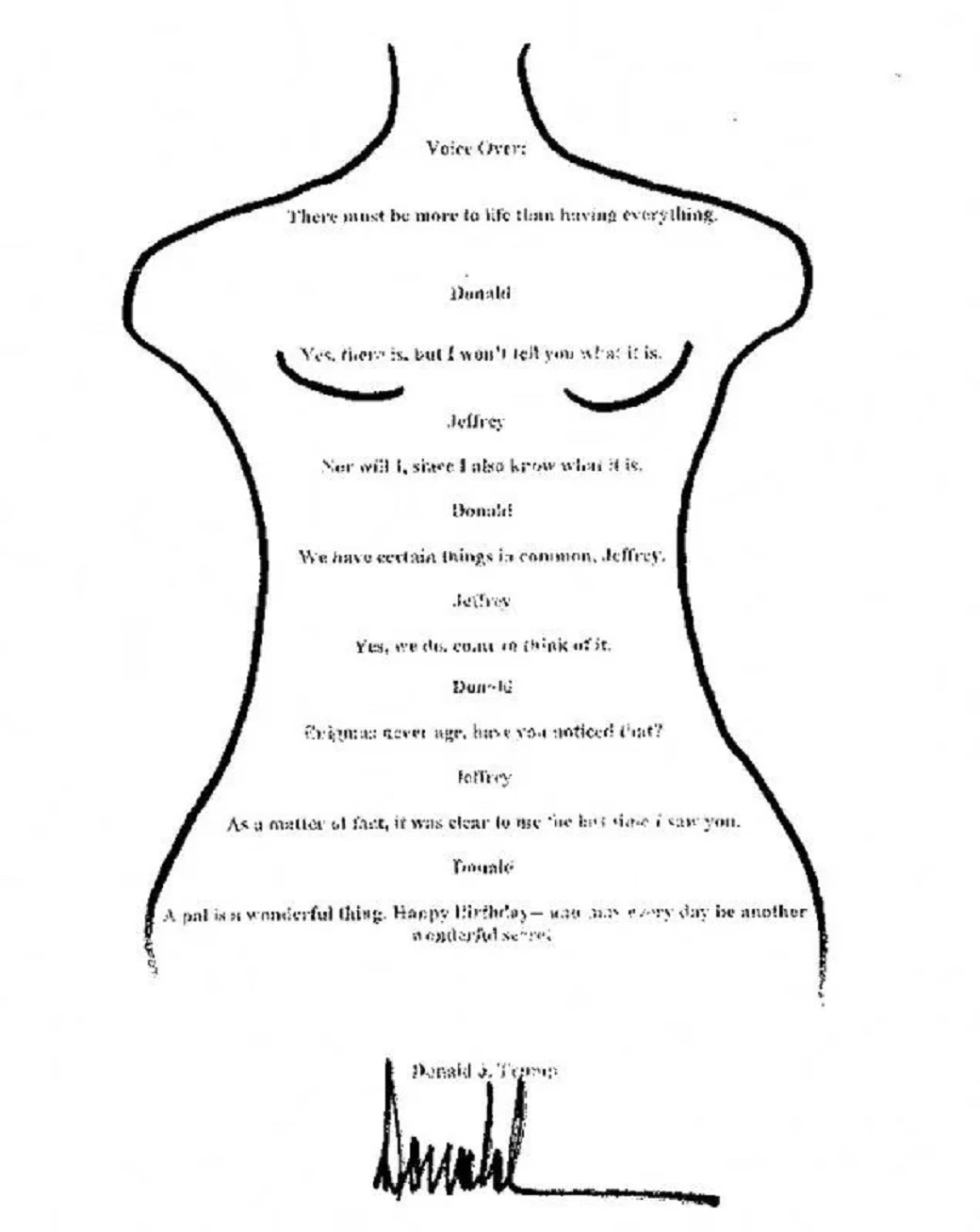
But the deepest fracture, in her account, comes from a moral line she says she could not cross — specifically, her criticism of how powerful men respond to allegations of abuse, and her insistence that authorities release certain files related to past sex-trafficking investigations. Greene portrays Trump’s private reaction to her public advocacy as dismissive and concerned more with protecting influential figures than supporting transparency. In her retelling, that was when she realized that what is marketed as “America First” doesn’t always match what happens behind the scenes.
Her disillusionment extends beyond Trump. She claims many Republican lawmakers laugh at him privately, mocking his speech patterns, his health, even his appearance, only to turn around and put on red hats when the cameras come out. For Greene, the hypocrisy became too much — a reminder, she says, that the political persona many project bears little resemblance to what they express when the microphones are off.
Her criticisms widen from there. She argues that Trump’s recent policy choices — from crypto-related legislation to his posture toward foreign leaders she once thought he opposed — reveal a shift toward establishment priorities rather than the populist message that vaulted him to power. Greene says that for all the talk about helping ordinary Americans, the beneficiaries she sees are still major donors, billionaires, and politically connected insiders.
At the same time, Greene seems aware of the irony surrounding her remarks. She acknowledges that she once amplified anger and division herself, and that the current political environment — the threats, the rage, the extremism — is partly the result of behavior she participated in. But she now describes the atmosphere as unsustainable, a system feeding on itself until no one inside it is safe from the next wave of hostility.

Her frustration also extends to the broader Republican caucus, which she describes as increasingly dysfunctional and increasingly willing to let the executive branch dictate its agenda. To her, the willingness of some lawmakers to follow Trump unquestioningly, even when they privately disagree with him, represents a collapse of the independence voters expect from elected officials.
Whether one sees her latest statements as genuine disillusionment, political repositioning, or a last attempt to salvage her own reputation before walking away, the impact is undeniable. Greene was not some distant critic; she was once one of Trump’s fiercest defenders. When someone that close begins pulling back the curtain, the reaction inside the movement is inevitably seismic.
And if her exit truly signals a coming wave of departures — as some reports suggest — the Republican Party may soon face a reckoning it has long postponed. The internal fractures can no longer be hidden behind slogans, loyalty tests, or carefully staged appearances. Greene’s departure, voluntary or not, marks a moment when the anger that once energized a movement is now turning inward. And it’s not clear how, or whether, the party can contain it.
More From FeDlan News:
PRESS RELEASE: Tesla Optimus Gen 2: Elon Musk’s $1 Trillion Army of Programmable Workers
Pete Hegseth’s “Kill Them All” Order Sparks Accusations of Advocating War Crimes
Trump’s “White Genocide” Myth Collapses Thanks to a White, Gay, Zulu-Speaking Mayor
The Truth Blackout: What They Don’t Want You to See in the Missing GDP and Jobs Data
A Republican Civil War: Why the GOP Is Quietly Bracing to Abandon Mike Johnson and Trump
A Presidency in Decline: Grave Questions About Trump’s Age, Health and Fitness
 Donate
Copyright 2024 FN, NewsRoom.