
By Jane Lewis & Ben Emos | Saturday, November 29, 2025 | 6 min read
Critics of Donald Trump often joke that when he isn’t golfing or hawking the latest novelty tied to his name—whether it’s a Bible printed overseas, a shiny trinket marketed as a collector’s item, or a new crypto scheme—he’s busy stirring up arguments across the world. They say that his appetite for grandstanding never fades, even when the targets shift. At one point he mused publicly about buying Greenland, later he lobbed political jabs at Canada, and most recently he has turned his attention toward African countries. Nigeria became an unexpected talking point, and South Africa has been thrust back under the glare of his commentary as he resurfaced an old claim of a so-called “white genocide.”
Many South Africans view that narrative not only as false but as harmful, especially because it ignores crises elsewhere, including the suffering in Gaza that human rights groups have been urging world leaders to address. It is in this context that one unusually compelling counterpoint has emerged, embodied not in a rebuttal from Pretoria or an international think tank, but from a soft-spoken mayor in KwaZulu-Natal whose daily work tells a very different story.
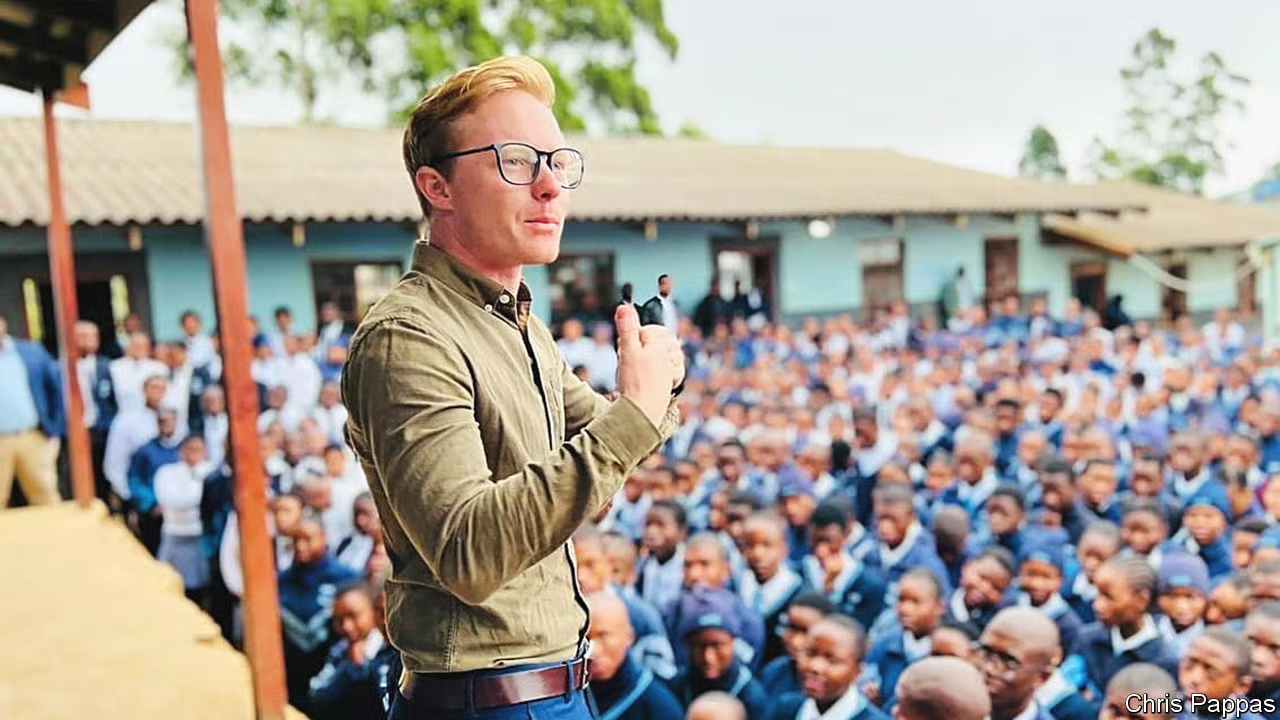
On a warm afternoon, one hundred and fifty chairs were set out on the dusty playground of a primary school in Meni, yet the crowd spilled out far beyond them. Children perched on brick walls, elders leaned on canes under the shade of a tree, and parents held babies on their laps as they waited for the meeting to begin. Chris Pappas—known locally as Mayor Pappas—stood at the front, greeting residents in fluent Zulu. The language rolled off his tongue with an ease that still surprises newcomers, because few white South Africans speak it at this level. But here, it has become almost unremarkable.
Pappas switches between English and Zulu depending on who he’s speaking to, but when addressing a community forum like this one, he chooses Zulu entirely. For two hours he walked through the municipality’s financial position: overdue payments owed to the electricity provider, budget allocations for new police cars, procurement delays on public works equipment, and the town hall’s plan to open new positions for local job seekers. He was patient and unhurried, pausing for people to raise their hands, repeating figures when needed, and taking notes on every request for the next budgeting cycle.
This meeting was the eighth in just two weeks. Pappas and his team have been traveling from settlement to settlement, focusing deliberately on rural communities that often feel distant from government. The turnout, he said, speaks for itself; residents want to be included, and they show up in droves when given the chance. Meni, which includes villages like Popumeni and more urban pockets such as Hilton and Howick, is home to about 120,000 people. When Pappas, running under the centrist Democratic Alliance banner, won the mayoralty in late 2021, it was a political shock in a province long dominated by the ANC. His municipality remains the only one in opposition hands in KwaZulu-Natal.
He often describes the transition not as a clash but as a shift in expectations. For nearly three decades, residents were governed by a single party with a single political culture. Changing course meant navigating habits, assumptions, and resistance—not from ordinary people, he says, but from the layers of bureaucracy embedded across decades. In the council chamber, the ANC occupies the majority seats, flanked by two representatives from the left-leaning EFF. Peppers sits opposite them with his coalition.
The mood in the chamber is courteous enough, though requests for interviews from ANC and EFF councilors went unanswered. Instead, their positions reveal themselves through debates that stretch late into the evening over committee responsibilities, heritage budgets, museum staffing, or the labyrinthine procedures that slow even basic municipal maintenance.
For the past year and a half, Pappas has buried himself in these processes. He talks often about how committees are created to oversee other committees, how mandates overlap and calcify. One of his priorities has been streamlining responsibilities so the municipality can act instead of constantly reviewing its own paperwork. He and his deputy, Sandi County, spend hours persuading ward committee members that they are community liaisons, not miniature councilors with competing power structures. It is a slow process, but gradually, he says, it is working.
Politics was not the career he imagined. As a student in Pretoria, he stumbled into leadership when he joined his university’s student council. It was the first time he realized that authority, used thoughtfully, could change people’s lives in practical ways—fixing student housing issues, adjusting campus services, or simply giving people the dignity of being heard. That experience planted the seed that eventually led him here, to a town hall far from the capital, speaking Zulu to a community that has grown to trust him.
What makes Peppers such a compelling answer to Trump’s narrative has less to do with the labels that get attached to him—white, gay, fluent in Zulu—and far more to do with the everyday reality he represents. His work shows a South Africa wrestling with the kinds of problems most communities face: roads that need fixing, young people hunting for real job opportunities, tourism projects waiting for someone to ignite them, and residents who genuinely want a say in how their towns are run. It’s a far cry from the dire, end-of-days version of the country that Trump likes to describe.
What Pappas reveals instead is a democracy that’s still growing up—flawed, complicated, sometimes messy, but unmistakably moving forward because people at the local level keep pushing it along. To critics who say Trump has used stories of “endangered” white South Africans for political theater, Pappas stands as a quiet reminder of what practical leadership actually looks like.
More From FeDlan News:
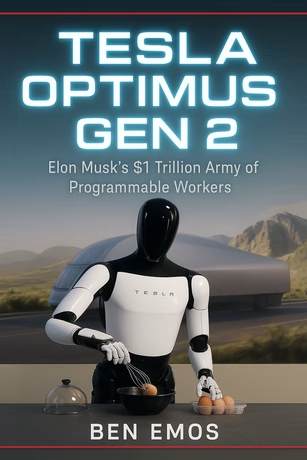
PRESS RELEASE: Tesla Optimus Gen 2: Elon Musk’s $1 Trillion Army of Programmable Workers
Trump’s Concealed MRI Raises Medical and Ethical Questions, Says Doctor
Elon Musk Pushes $1 Trillion Tesla Pay Plan to Preempt Shareholder Lawsuit Over $29 Billion Award
Democrats and Independents’ New Argument to Judges on Crime: “Trump Won’t Pardon Us”
Trump’s Golden Ballroom: White House Demolition Sparks a Constitutional Crisis
Tense Oval Office Meeting: Zelenskyy Confronts Trump After Shouting Match
 Donate
Copyright 2024 FN, NewsRoom.